15 Types of Men Women Should Be Careful About Choosing as Husbands
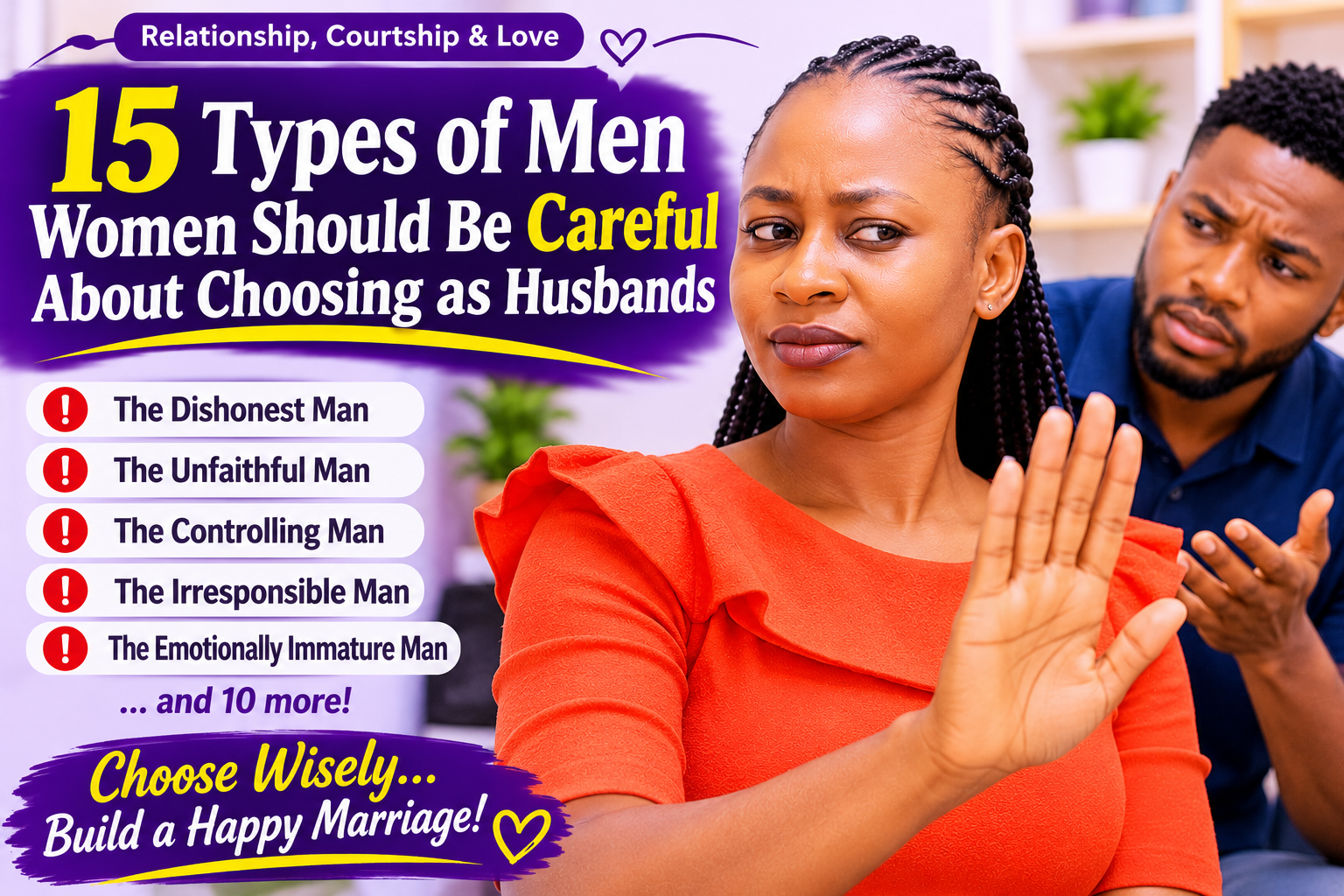
15 Types of Men Women Should Be Careful About Choosing as Husbands
Marriage is more than falling in love, enjoying romantic moments or finding someone who makes you feel special. It is a lifelong commitment that requires honesty, responsibility, patience, respect, understanding and emotional maturity.
During courtship, many people become so emotionally attached that they overlook behaviours that could eventually affect their marriage. Some women focus on how much a man loves them, how attractive he is, his financial position or the promises he makes without paying sufficient attention to his character.
However, the person you choose to marry will become your partner in making decisions, managing responsibilities, handling disagreements and navigating life's challenges.
This does not mean that a potential husband must be perfect. Everyone has weaknesses and areas that require improvement. What matters is whether he recognises his weaknesses, accepts responsibility and demonstrates a genuine willingness to grow.
Here are 15 types of men women should carefully evaluate before choosing a husband.
1. The Dishonest Man
Honesty is one of the foundations of a healthy marriage. A man who constantly lies, hides important information or manipulates the truth can make it difficult for his partner to trust him.
Dishonesty may involve concealing financial problems, lying about relationships, creating false stories or deliberately withholding information that could affect the relationship.
A marriage cannot thrive when one partner constantly questions whether the other is telling the truth.
What to observe: Does he accept responsibility when caught in a lie? Does he tell the truth even when it is uncomfortable? Are his words consistent with his actions?
2. The Unfaithful Man
Faithfulness involves commitment, honesty and respect for the relationship.
A man who repeatedly cheats, entertains romantic relationships outside his commitment or constantly seeks attention from other women may struggle to maintain the trust required in marriage.
Nobody should assume that marriage will automatically transform a person's attitude towards fidelity.
What to observe: Does he respect relationship agreements? Does he take responsibility for previous betrayals? Does he demonstrate genuine changes in behaviour rather than simply making promises?
3. The Controlling Man
There is a difference between expressing concern and controlling another person's life.
A controlling man may dictate what his partner wears, where she goes, whom she speaks to, how she spends her money or whether she can maintain relationships with family and friends.
He may disguise controlling behaviour as love, protection or jealousy.
Healthy relationships allow partners to express concerns while respecting each other's individuality and independence.
What to observe: Does he respect your decisions? Can you disagree with him without fear? Does he respect your friendships, family relationships and personal independence?
4. The Irresponsible Man
Marriage involves responsibilities that cannot be avoided whenever life becomes difficult.
An irresponsible man may constantly blame others for his problems, avoid commitments, fail to keep promises or expect his partner to solve every difficulty.
Responsibility is not measured only by financial provision. It also involves emotional availability, accountability, decision-making and willingness to contribute to family life.
What to observe: Does he keep his promises? Does he take responsibility for his decisions? Can he handle everyday responsibilities without constantly depending on others?
5. The Emotionally Immature Man
Emotional maturity is important because disagreements are inevitable in marriage.
An emotionally immature man may respond to ordinary disagreements with shouting, insults, silent treatment, unnecessary arguments or childish reactions.
He may find it difficult to apologise, accept correction or consider another person's feelings.
A healthy marriage requires two people who can communicate even when they disagree.
What to observe: How does he react when he is angry? Can he discuss difficult issues calmly? Does he acknowledge when he is wrong?
6. The Abusive Man
Abuse should never be mistaken for love or passion.
Abusive behaviour can be physical, verbal, emotional, psychological, sexual or financial. It may involve threats, intimidation, humiliation, forced sexual activity, isolation or deliberately making a partner feel worthless.
Some people tolerate abusive behaviour because they believe marriage will change their partner. Unfortunately, marriage does not automatically remove abusive patterns.
Your safety and dignity should never be sacrificed to maintain a relationship.
What to observe: Does he intimidate you? Does he use threats to control you? Does he respect your consent and personal safety?
If you experience abuse, seek support from trusted people or appropriate professional services. You do not have to wait until marriage to take it seriously.
7. The Financially Reckless Man
Financial disagreements can become a major source of tension in marriage.
A financially reckless man may spend without planning, accumulate unnecessary debts, gamble irresponsibly, conceal financial obligations or refuse to discuss money.
Being wealthy is not a requirement for becoming a good husband. However, financial responsibility, transparency and willingness to plan are important.
What to observe: Does he manage his income responsibly? Can he discuss financial matters honestly? Does he understand saving, budgeting and financial commitments?
8. The Disrespectful Man
Respect should not disappear simply because two people are emotionally attached.
A disrespectful man may insult his partner, belittle her opinions, embarrass her publicly or treat her as though her feelings do not matter.
Pay attention to how he treats people who cannot offer him anything in return. His behaviour towards waiters, cleaners, relatives and strangers can reveal important aspects of his character.
What to observe: Does he listen when you speak? Does he respect your opinions? How does he treat people during disagreements?
9. The Manipulative Man
Manipulation involves influencing another person through deception, guilt, fear or emotional pressure.
A manipulative man may make his partner feel guilty whenever she disagrees with him. He may use emotional blackmail, threats of abandonment or false promises to obtain what he wants.
For example, he may say, "If you truly love me, you will do this for me," even when the request violates your personal boundaries.
Love should not require someone to surrender their dignity or freedom.
What to observe: Does he respect your decisions? Does he use guilt to influence you? Can you say no without being emotionally punished?
10. The Addicted Man Who Refuses Help
Addiction can affect relationships, finances, trust and family stability.
Problematic alcohol or drug use, gambling and other compulsive behaviours may create serious difficulties when the person refuses to acknowledge the problem or seek help.
It is important to distinguish between someone experiencing a problem and someone who refuses accountability or treatment.
People can recover, and having a history of addiction does not automatically make someone unsuitable for marriage. However, genuine recovery, honesty and sustained responsibility matter.
What to observe: Does he acknowledge the problem? Is he willing to seek appropriate professional support? Does he take responsibility for the consequences of his behaviour?
11. The Overly Dependent Man
A healthy marriage involves mutual support, not one person carrying the entire emotional and practical responsibility of the relationship.
An overly dependent man may expect his partner to make every decision, solve all his problems, manage his emotions and organise his entire life.
There is nothing wrong with supporting one another. The problem arises when support becomes a permanent expectation without personal responsibility.
What to observe: Can he make responsible decisions? Does he manage his personal affairs? Can he support his partner emotionally as well?
12. The Secretive Man
Privacy is healthy in relationships, but persistent secrecy about important matters can damage trust.
A secretive man may hide financial obligations, previous commitments, significant relationships, family responsibilities or other information that could affect a future marriage.
Courtship should provide an opportunity for couples to understand one another before making long-term commitments.
What to observe: Is he transparent about important aspects of his life? Does he become unnecessarily defensive when reasonable questions are asked? Are there repeated inconsistencies in his explanations?
13. The Unambitious Man Who Rejects Growth
Ambition does not necessarily mean becoming wealthy, owning a large business or having a prestigious career.
It involves having a sense of direction, taking responsibility for personal development and being willing to work towards meaningful goals.
A man may not have achieved everything he desires, but there should be some willingness to improve his circumstances.
The concern is not someone who is struggling financially or professionally. It is someone who refuses to make an effort, rejects growth and expects life to improve without personal responsibility.
What to observe: Does he have realistic goals? Is he willing to learn? Does he make consistent efforts towards improving his life?
14. The Man Who Disrespects Boundaries
Personal boundaries are necessary in every healthy relationship.
A man who repeatedly ignores his partner's boundaries may pressure her into sexual activities, invade her privacy, disregard her decisions or refuse to accept that she has the right to say no.
Respecting boundaries means understanding that love does not give anyone unlimited access to another person's body, time, privacy or personal decisions.
What to observe: Does he respect your sexual boundaries? Does he accept no without pressure? Does he respect your need for personal space?
15. The Man Who Is Not Ready for Marriage
Some men enjoy companionship, romantic attention and the benefits of being in a relationship without being prepared for marriage.
A man may continually postpone serious conversations, avoid discussing the future or make promises without taking meaningful steps towards commitment.
There is nothing wrong with someone who honestly admits that he is not ready for marriage. The problem is creating expectations that do not reflect his actual intentions.
What to observe: Does he genuinely want marriage? Can he discuss future responsibilities? Are his intentions consistent with his actions?
What Women Should Understand Before Making a Marriage Decision
The purpose of identifying these categories is not to encourage women to search for perfect men. Nobody is perfect, and every individual has areas that require improvement.
The important distinction is between ordinary human weaknesses and persistent harmful behaviour.
For example, a man who occasionally makes mistakes but accepts responsibility and works towards improvement is different from someone who repeatedly lies, manipulates, abuses or refuses to change.
Women should also avoid making marriage decisions based exclusively on:
Physical attraction and romantic chemistry.
Financial status and material possessions.
Pressure from family, friends or society.
Fear of getting older or remaining single.
The length of time already invested in the relationship.
Promises that are not supported by consistent actions.
Courtship should be a period of learning, observation, honest conversations and understanding.
Questions Women Should Ask Before Choosing a Husband
Before making a lifelong commitment, consider these questions:
Can I trust this man even when I am not around him?
Does he respect my opinions and personal boundaries?
How does he handle anger, disappointment and disagreement?
Is he financially responsible and transparent?
Does he accept responsibility for his mistakes?
Does he demonstrate genuine respect for women and other people?
Are our values, beliefs and expectations about marriage compatible?
Can we discuss difficult subjects without fear or intimidation?
Does he demonstrate commitment through consistent actions?
Do I feel safe, respected and valued in this relationship?
These questions are not an examination that guarantees a successful marriage. They are starting points for meaningful conversations.
Final Thoughts: Choose Character, Not Just Chemistry
Love is important, but love alone does not guarantee a healthy marriage.
A successful marriage requires more than romantic feelings. It requires two people who are willing to communicate, respect one another, accept responsibility, remain faithful and work together through life's challenges.
Do not ignore persistent warning signs simply because you are emotionally attached to someone. Equally, do not reject a person merely because they have weaknesses they genuinely acknowledge and are working to improve.
Pay attention to patterns, not just promises. Observe how he behaves when he is angry, disappointed, corrected or faced with responsibility.
Most importantly, remember that marriage should not require you to surrender your safety, dignity, identity or peace of mind.
The right person is not necessarily a perfect person, but should be someone whose character, values and willingness to grow make a healthy partnership possible.
💬 Comments
No comments yet. Be the first to comment!
← Back to Blog📚 Related Articles
Who Do You Call Your Friend? Who Is the Third Person in Your Marriage?
Marriage is designed to bring two people together to build a life, share responsibilities, make deci...
Read More →
Silence in Marriage: Causes, Consequences and Solutions – The Hidden Marriage Killer
Silence in Marriage: Causes, Consequences and Solutions – The Hidden Marriage KillerMarriage is expe...
Read More →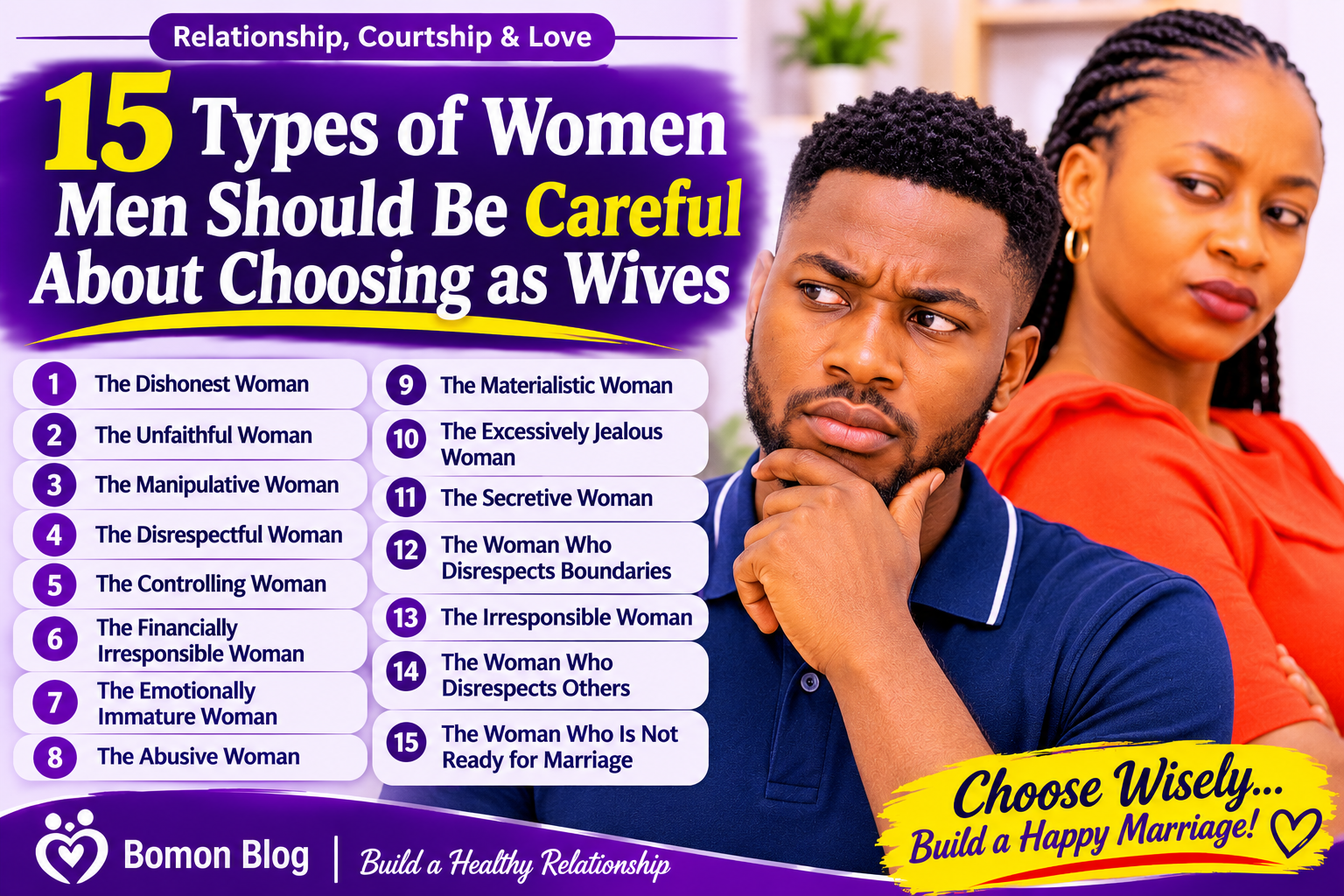
15 Types of Women Men Should Be Careful About Choosing as Wives
15 Types of Women Men Should Be Careful About Choosing as WivesMarriage is one of the most significa...
Read More →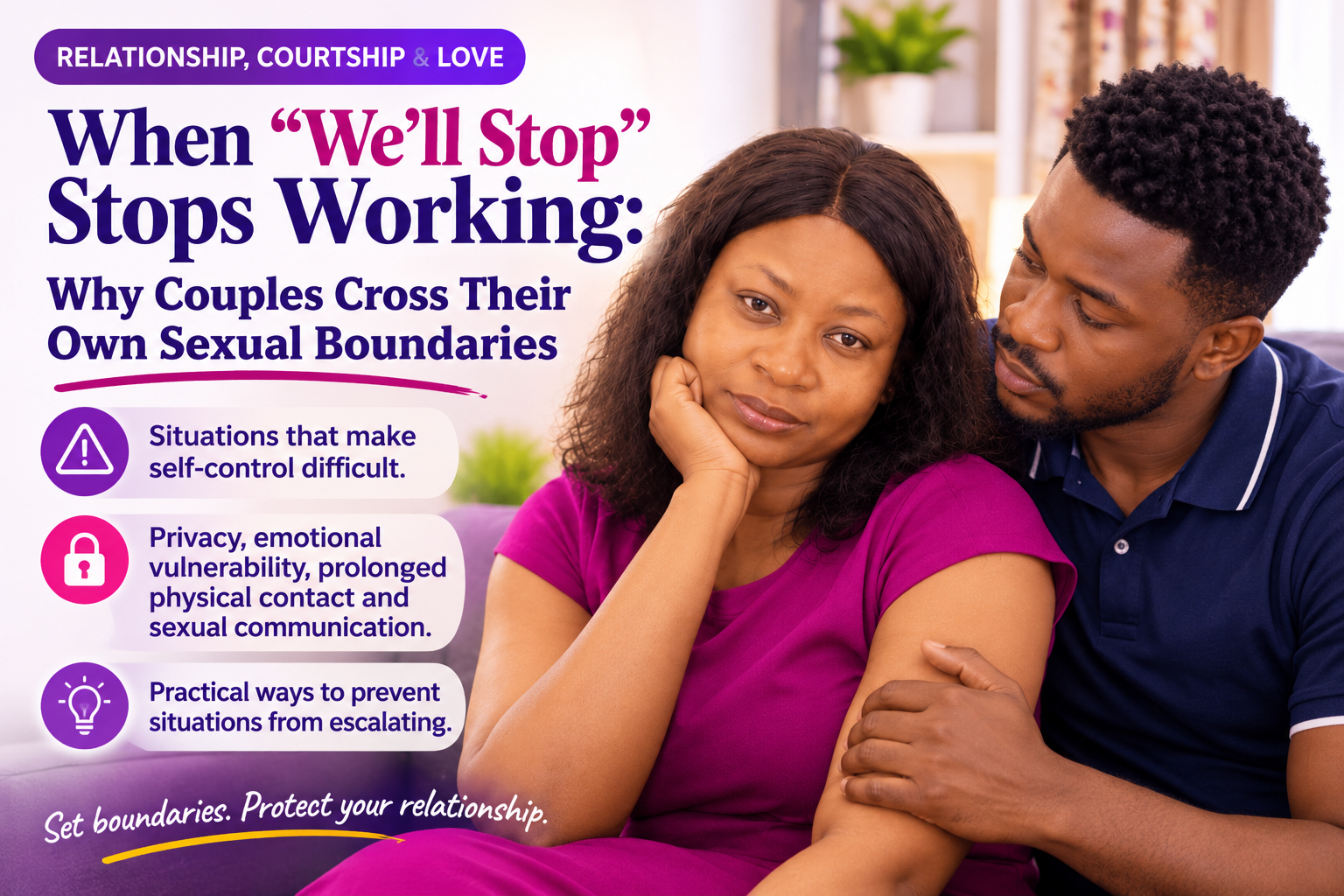
When “We’ll Stop” Stops Working: Why Couples Cross Their Own Sexual Boundaries
Relationships built on clear values often run into a frustrating paradox: decision-making is clear i...
Read More →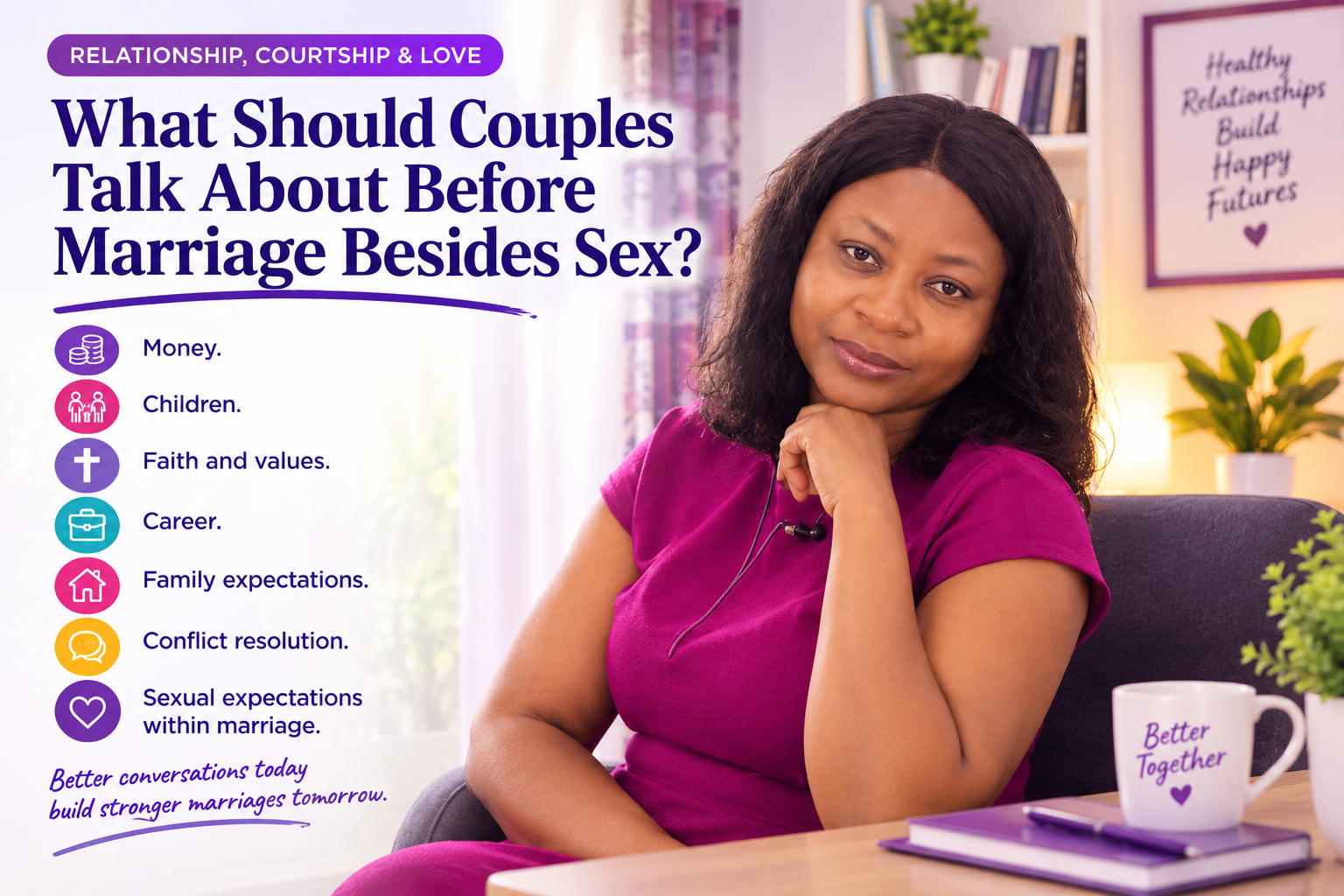
7 Essential Topics Couples Must Discuss Before Marriage (Beyond Physical Intimacy)
Entering a life-long partnership is one of the most exciting milestones standard in adult life. Whil...
Read More →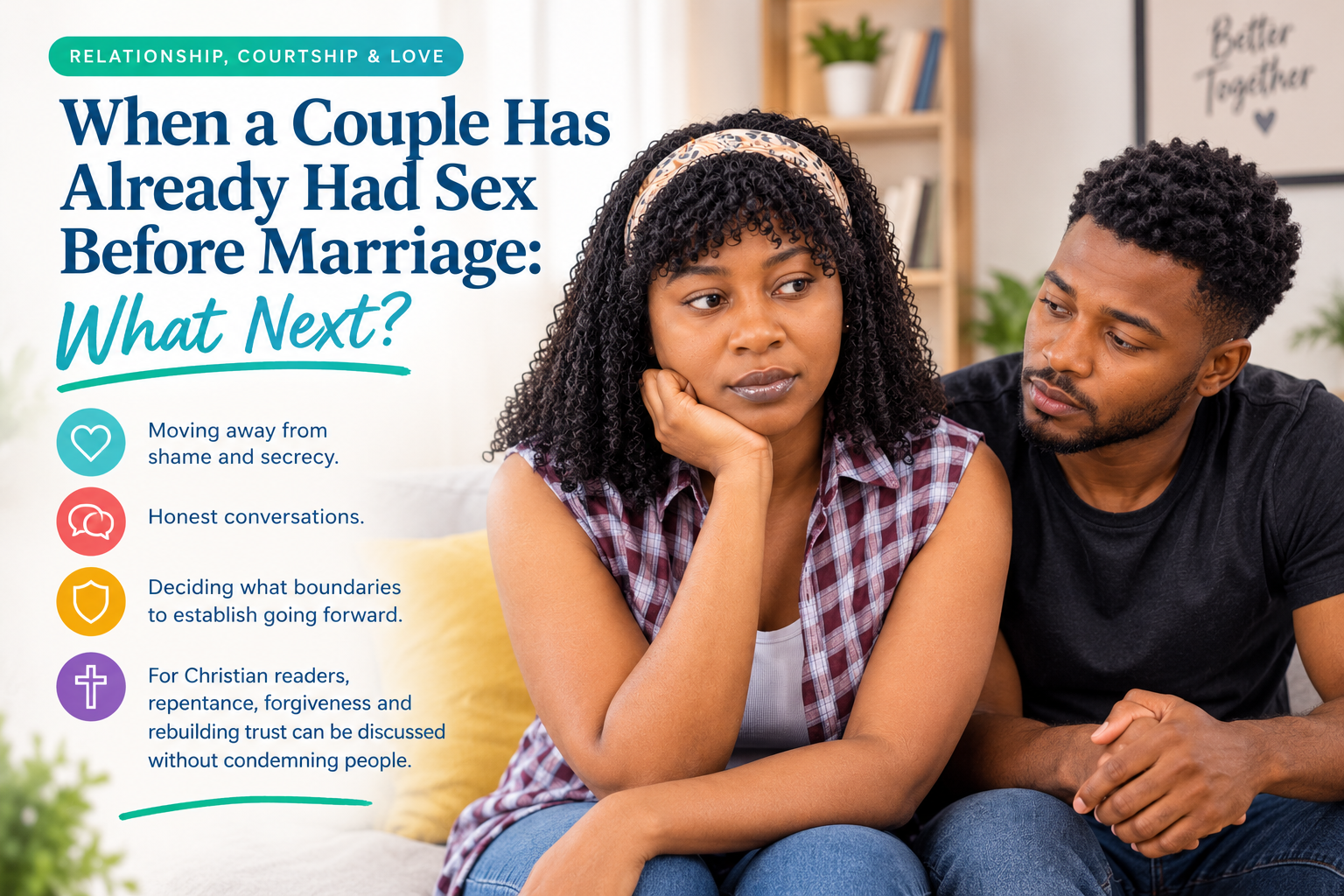
When a Couple Has Already Had Sex Before Marriage: What Next?
Finding yourselves in a position where you have crossed physical boundaries before marriage—or soone...
Read More →