Silence in Marriage: Causes, Consequences and Solutions – The Hidden Marriage Killer
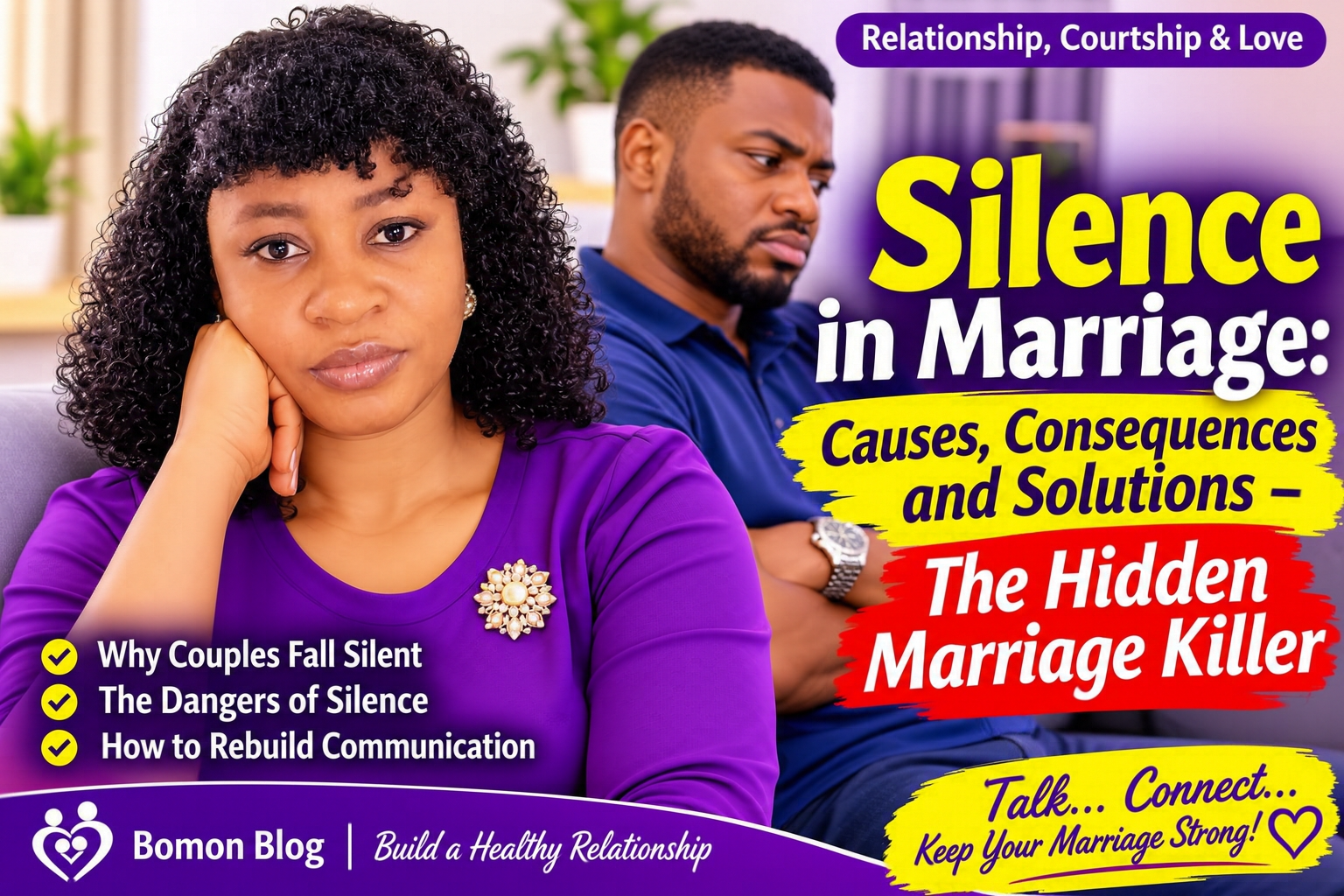
Silence in Marriage: Causes, Consequences and Solutions – The Hidden Marriage Killer
Marriage is expected to be a relationship where two people communicate, share their experiences, express their feelings and support each other through different stages of life.
However, not every marriage enjoys healthy communication.
Some couples gradually stop talking about their feelings, concerns, disappointments and expectations. They may still live together, eat together, raise children together and perform their daily responsibilities, but emotionally, they become distant.
They share the same home but no longer share their thoughts.
This is one of the silent struggles affecting many marriages.
Silence is not always harmful. Sometimes, taking a break during an argument prevents people from saying things they may later regret. However, when silence becomes a consistent way of avoiding conversations, expressing anger, punishing a partner or escaping emotional responsibility, it can become destructive.
Silence can become a hidden marriage killer because it destroys communication gradually, often without either partner recognising how far apart they have become.
1. Understanding Silence in Marriage
Silence in marriage refers to a situation where one or both partners consistently avoid meaningful communication, emotional expression or discussions about important issues.
It can take different forms.
Emotional withdrawal: One partner stops sharing personal feelings, worries, disappointments and experiences.
The silent treatment: One partner deliberately refuses to communicate as a way of punishing, controlling or expressing anger towards the other.
Avoidance of difficult conversations: Couples refuse to discuss sensitive matters because they fear arguments, disagreements or uncomfortable truths.
Loss of meaningful communication: Conversations become limited to household responsibilities, children, bills, food and other routine matters.
Emotional disconnection: Partners gradually lose interest in understanding each other's experiences and feelings.
Not every quiet moment indicates a problem. Some people naturally communicate less than others. The concern arises when silence becomes a repeated pattern that prevents important issues from being addressed.
2. Causes of Silence in Marriage
There are several reasons couples gradually become silent towards each other.
A. Unresolved Arguments and Past Disappointments
When disagreements are repeatedly ignored without resolution, resentment can accumulate.
A partner who feels unheard may eventually stop explaining their feelings.
For example, a wife may repeatedly complain about her husband's lack of involvement in household responsibilities. If her concerns are consistently dismissed, she may eventually stop raising the issue.
Similarly, a husband who feels constantly criticised may withdraw rather than continue conversations that leave him feeling inadequate.
Over time, unresolved disagreements become emotional barriers.
B. Fear of Arguments
Some couples avoid important conversations because they expect every discussion to end in an argument.
They may prefer silence because it appears easier than dealing with shouting, accusations, insults or unnecessary tension.
Unfortunately, avoiding every difficult conversation does not resolve the underlying problem.
C. Lack of Attention and Emotional Support
Communication requires attention.
When one partner constantly feels ignored, unappreciated or emotionally unsupported, they may gradually withdraw.
A spouse who repeatedly attempts to share personal experiences but receives little interest may eventually stop making those efforts.
D. Pride and Unwillingness to Apologise
Pride can prevent couples from resolving disagreements.
Sometimes, both partners know that something has gone wrong, but neither wants to initiate reconciliation.
They wait for the other person to apologise first.
Days become weeks, and sometimes weeks become months.
The issue may have started with something relatively small, but pride makes reconciliation increasingly difficult.
E. Infidelity and Broken Trust
Betrayal can create deep emotional wounds.
A partner who discovers infidelity may struggle to communicate because of disappointment, anger, confusion or loss of trust.
Even when the couple remains together, meaningful communication may become difficult.
Rebuilding trust requires honesty, accountability, patience and consistent effort.
F. Financial Pressure
Financial difficulties can place considerable pressure on a marriage.
Debt, unemployment, inadequate income, financial secrecy and disagreements about spending can create tension.
Instead of discussing their financial challenges openly, some couples withdraw and avoid conversations about money.
G. Lack of Quality Time
Marriage requires more than sharing accommodation and performing household duties.
When couples become occupied with work, business, children, social activities and personal responsibilities, meaningful communication may gradually disappear.
They may spend most of their time together without genuinely connecting.
H. Emotional or Psychological Exhaustion
Sometimes, silence is a response to emotional exhaustion.
A partner who has experienced repeated disappointment, stress or conflict may withdraw because they no longer have the emotional energy to continue discussing the same problems.
This situation deserves understanding rather than automatic accusations.
3. Consequences of Silence in Marriage
Silence may initially appear to maintain peace, but prolonged emotional withdrawal can have serious consequences.
A. Emotional Distance
One of the first consequences is emotional disconnection.
Partners may stop sharing their dreams, fears, plans and personal experiences.
They gradually lose the feeling of being emotionally close to each other.
B. Misunderstanding and Wrong Assumptions
When couples stop communicating, they begin interpreting each other's behaviour without sufficient information.
A wife may interpret her husband's silence as a lack of love.
A husband may interpret his wife's withdrawal as disrespect.
Sometimes, both partners are struggling with personal issues but neither understands what the other is experiencing.
C. Accumulation of Resentment
Unspoken disappointments do not automatically disappear.
They may accumulate until ordinary situations begin to trigger emotional reactions.
A small disagreement about household expenses may suddenly bring up several years of unresolved frustration.
D. Loss of Intimacy
Emotional connection contributes significantly to physical and romantic intimacy.
When couples become emotionally distant, affection, tenderness and sexual connection may also decline.
Partners may begin to feel uncomfortable expressing love because the emotional relationship has weakened.
E. Loneliness Within Marriage
One of the most painful experiences is feeling lonely while living with someone.
A person may have a spouse, share a bedroom and participate in family activities but still feel emotionally abandoned.
This can affect self-esteem, happiness and emotional well-being.
F. Increased Vulnerability to Relationship Problems
When communication becomes weak, partners may find it difficult to recognise and address emerging problems.
Unresolved conflicts, unmet emotional needs and broken trust can become more difficult to repair.
Silence does not automatically lead to infidelity or separation, but it can create conditions in which relationship difficulties remain hidden and unresolved.
G. Impact on Children and Family Life
Children can be affected by the emotional atmosphere in their homes.
Even when parents do not argue openly, children may notice tension, avoidance and a lack of affection.
They may also develop unhealthy ideas about communication and conflict resolution from what they observe.
A healthy home should encourage respectful communication, not simply the absence of arguments.
4. The Difference Between Healthy Silence and Harmful Silence
It is important to understand that silence is not always negative.
Sometimes, people need time to calm down before discussing sensitive matters.
Healthy silence:
Taking time to calm down during an argument.
Reflecting before responding to a difficult issue.
Respecting a partner's need for personal space.
Agreeing to continue a conversation when both people are calmer.
Harmful silence:
Deliberately ignoring a partner to cause emotional pain.
Refusing to discuss important family matters.
Using silence to control or punish a spouse.
Consistently avoiding accountability.
Withdrawing affection and communication without explaining why.
The difference often lies in the intention, duration and willingness to reconnect.
Taking a break is healthy when both partners understand that the conversation will continue. Using silence as punishment is different.
5. Solutions: How Couples Can Overcome Silence in Marriage
The good news is that communication can be rebuilt when both partners are willing to make an effort.
A. Start Having Honest Conversations
Couples should create opportunities to discuss their feelings without turning every conversation into an argument.
Instead of saying, "You never care about me," try saying:
"I have been feeling emotionally disconnected from you, and I would like us to spend more time communicating."
The goal is to express feelings without attacking the other person.
B. Learn to Listen
Communication is not only about speaking. It also involves listening.
Sometimes, a partner does not need immediate advice or criticism. They simply need to feel heard.
Allow your spouse to explain their concerns without constantly interrupting or becoming defensive.
C. Address Problems Early
Do not allow every disagreement to become an unresolved issue.
When something hurts you, communicate respectfully rather than allowing resentment to accumulate.
Small issues are often easier to address before they become major sources of conflict.
D. Learn to Apologise
An apology should not be seen as a sign of weakness.
Sometimes, rebuilding communication begins with one partner acknowledging their contribution to a problem.
A sincere apology should involve accepting responsibility and making an effort not to repeat the behaviour.
E. Create Time for Each Other
Couples should deliberately create opportunities to connect.
This may involve:
Eating together without distractions.
Going for walks.
Discussing daily experiences.
Planning activities together.
Spending time without mobile phones or television.
Asking each other how they are genuinely feeling.
Meaningful communication does not always require expensive outings.
F. Discuss Difficult Issues Respectfully
Money, intimacy, parenting, family interference and expectations can be sensitive subjects.
However, avoiding these conversations indefinitely can damage a marriage.
Couples should learn to discuss difficult matters without insults, threats or humiliation.
G. Understand Each Other's Communication Styles
People express themselves differently.
One partner may prefer discussing problems immediately, while another may need time to process emotions.
Understanding these differences can reduce unnecessary misunderstandings.
However, needing time to process emotions should not become a permanent excuse for refusing communication.
H. Seek Professional Marriage Counselling
When silence has continued for a long time, couples may struggle to reconnect without assistance.
A qualified marriage counsellor or therapist can help identify communication patterns, address unresolved conflicts and guide partners towards healthier ways of relating.
Where abuse, intimidation or coercion is present, safety and appropriate individual support should come first.
6. Questions Every Married Couple Should Ask
Couples can use these questions to evaluate the quality of their communication:
When was the last time we had a meaningful conversation?
Can we express our feelings without fear of being insulted?
Do we listen to understand or simply wait for our turn to respond?
Are there unresolved issues we have avoided discussing?
Do we use silence to punish each other?
Do we still share our dreams, concerns and personal experiences?
Do we make time for each other outside household responsibilities?
What can we both do to improve our communication?
These questions are not intended to assign blame. They are opportunities for reflection and improvement.
7. A Message to Husbands and Wives
Do not assume that because your spouse is no longer complaining, everything is fine.
Sometimes, a person stops complaining because they feel their concerns will never be taken seriously.
Do not mistake silence for satisfaction.
A husband should be interested in understanding his wife's emotional experiences, just as a wife should make an effort to understand her husband's concerns.
Neither partner should carry the entire responsibility for maintaining communication.
Marriage requires mutual effort.
It is also important to remember that communication should be safe. Nobody should be expected to tolerate abuse, intimidation or threats simply to keep conversations going.
Conclusion: Do Not Allow Silence to Become the Language of Your Marriage
Marriage does not require couples to agree on everything. Disagreements are a normal part of sharing life with another person.
What matters is the ability to communicate, listen, apologise, forgive where appropriate and work towards solutions.
Silence may temporarily prevent an argument, but prolonged silence can prevent reconciliation.
Two people can share a house and still become strangers when they stop sharing their thoughts and feelings.
If communication has disappeared from your marriage, do not ignore the warning signs.
Start with an honest conversation. Listen without unnecessary defensiveness. Acknowledge the problems and make deliberate efforts to reconnect.
Remember: A healthy marriage is not one without disagreements. It is one where two people are willing to communicate, understand each other and work through their differences.
Sometimes, the greatest threat to a marriage is not the argument that takes place but the conversation that never happens.
💬 Comments
No comments yet. Be the first to comment!
← Back to Blog📚 Related Articles
Who Do You Call Your Friend? Who Is the Third Person in Your Marriage?
Marriage is designed to bring two people together to build a life, share responsibilities, make deci...
Read More →
15 Types of Women Men Should Be Careful About Choosing as Wives
15 Types of Women Men Should Be Careful About Choosing as WivesMarriage is one of the most significa...
Read More →
15 Types of Men Women Should Be Careful About Choosing as Husbands
15 Types of Men Women Should Be Careful About Choosing as HusbandsMarriage is more than falling in l...
Read More →
When “We’ll Stop” Stops Working: Why Couples Cross Their Own Sexual Boundaries
Relationships built on clear values often run into a frustrating paradox: decision-making is clear i...
Read More →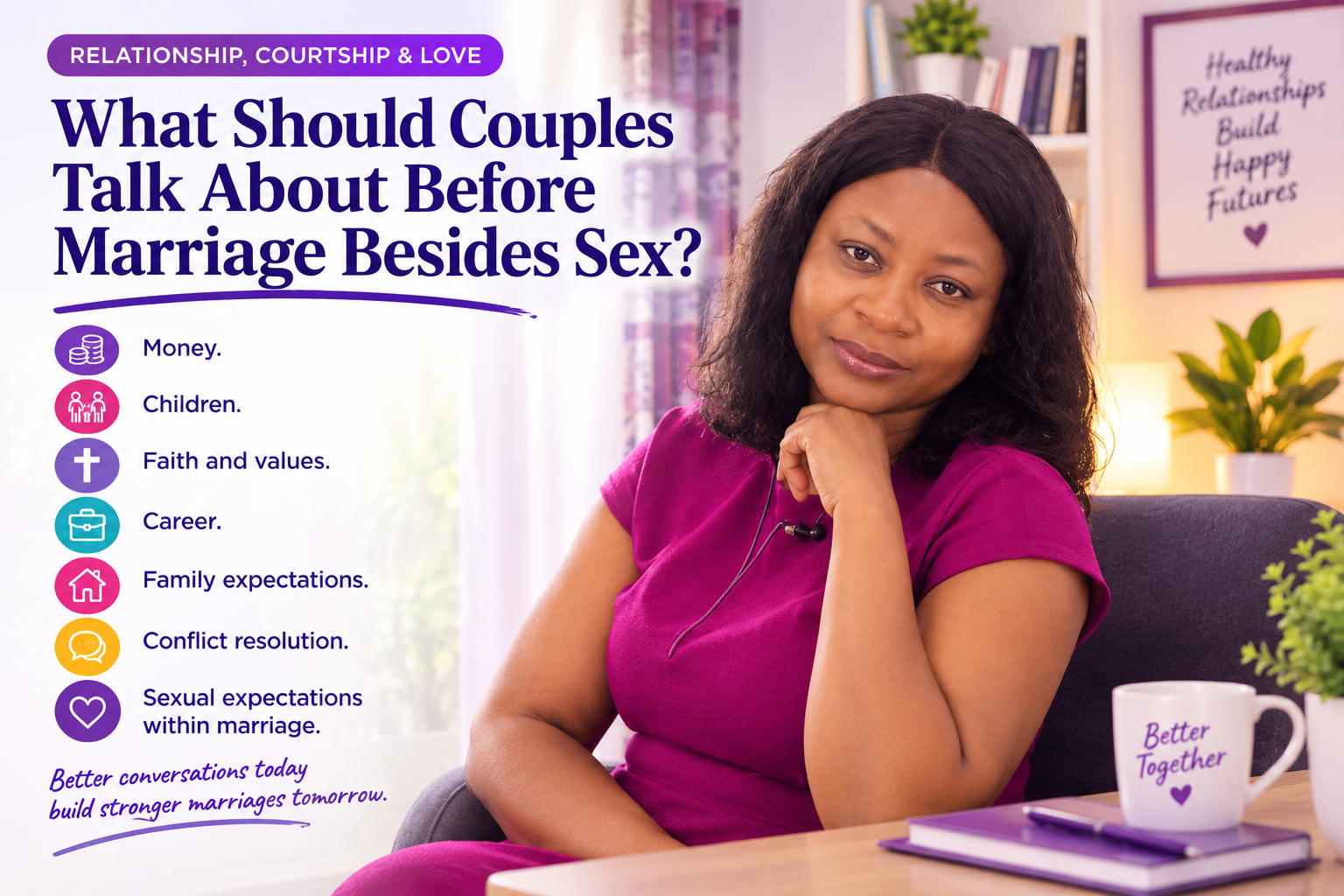
7 Essential Topics Couples Must Discuss Before Marriage (Beyond Physical Intimacy)
Entering a life-long partnership is one of the most exciting milestones standard in adult life. Whil...
Read More →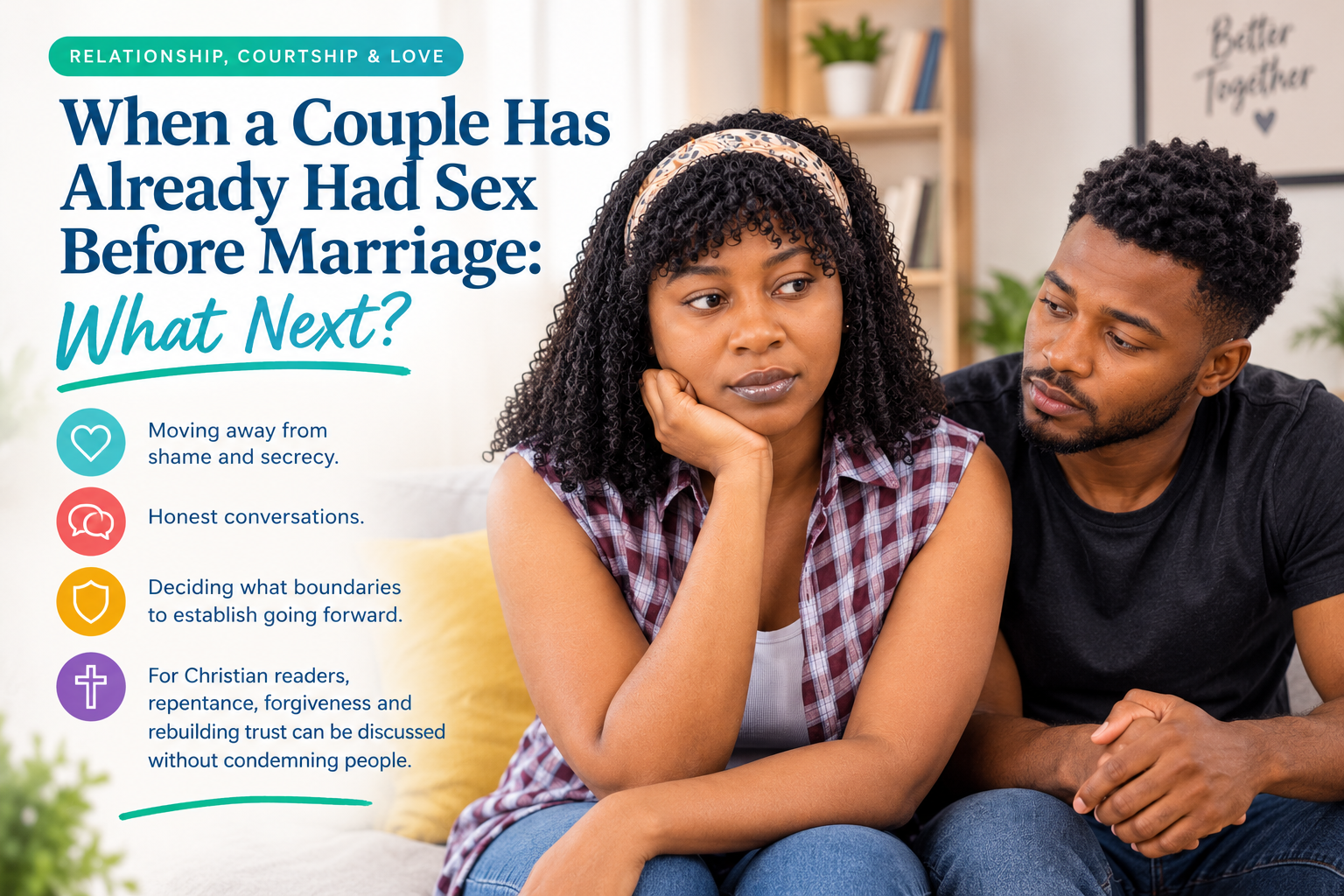
When a Couple Has Already Had Sex Before Marriage: What Next?
Finding yourselves in a position where you have crossed physical boundaries before marriage—or soone...
Read More →