15 Types of Women Men Should Be Careful About Choosing as Wives
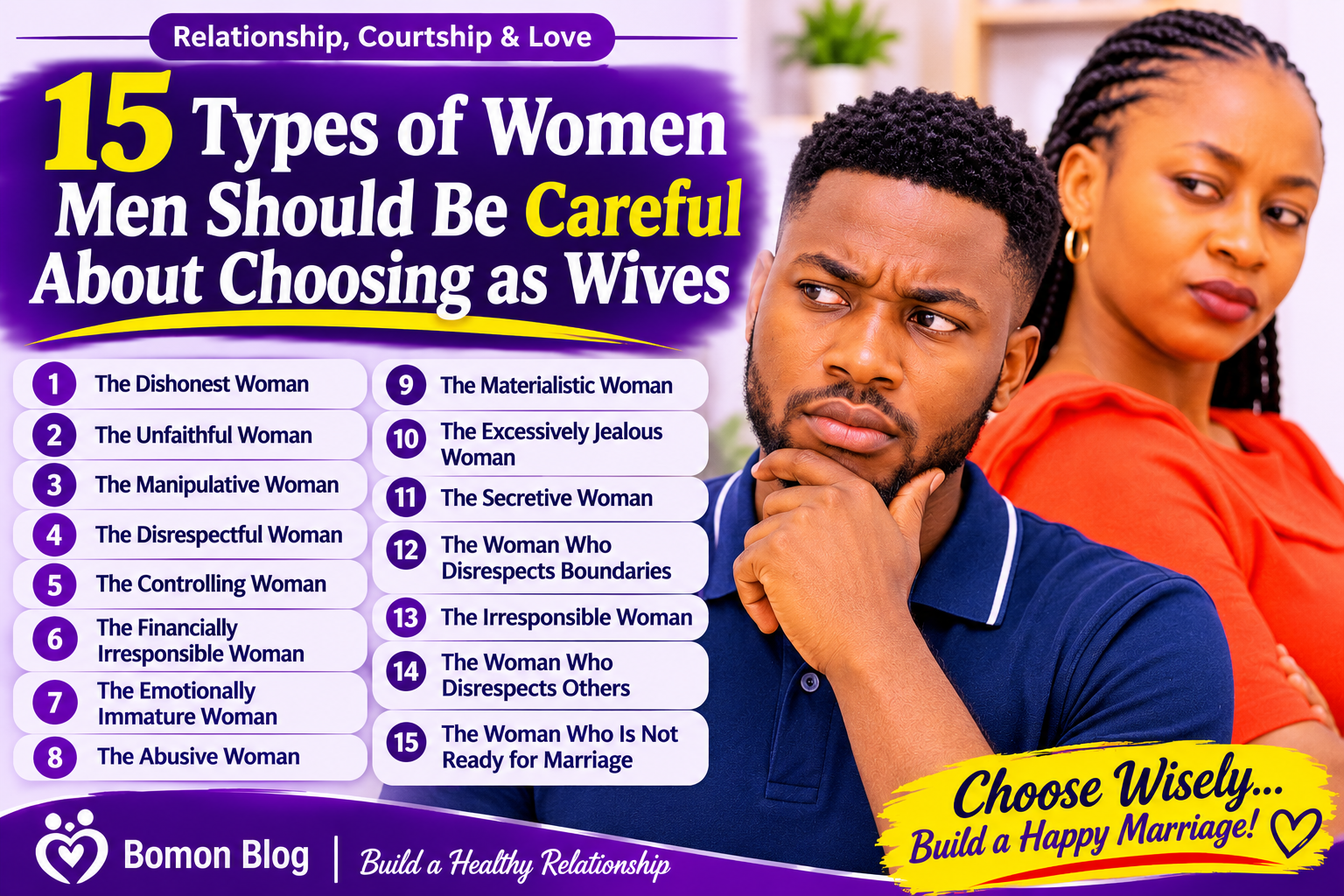
15 Types of Women Men Should Be Careful About Choosing as Wives
Marriage is one of the most significant commitments two people can make. It involves sharing responsibilities, making important decisions, building a family and navigating life's challenges together.
While love, attraction and companionship are important, they are not enough to guarantee a healthy marriage.
Some men become so emotionally attached during courtship that they overlook behaviours that could eventually affect their peace, finances, emotional well-being and family life.
A woman does not have to be perfect to become a good wife. Every individual has weaknesses, personal struggles and areas that require improvement. What matters is character, accountability, emotional maturity and the willingness to grow.
Men should therefore pay attention not only to how a woman treats them when everything is going well but also to how she behaves during disagreements, disappointment, financial difficulties and challenging situations.
Here are 15 types of women men should carefully evaluate before choosing a wife.
1. The Dishonest Woman
Honesty is one of the foundations of a successful marriage.
A dishonest woman may repeatedly lie, conceal important information, create false stories or manipulate situations to avoid responsibility.
Dishonesty can involve hiding financial problems, lying about significant relationships, concealing important personal information or consistently giving contradictory explanations.
When dishonesty becomes a pattern, it becomes difficult to build trust.
What to observe:
Does she tell the truth even when it is uncomfortable?
Does she accept responsibility when she makes mistakes?
Are her words consistent with her actions?
Does she deliberately hide information that could affect your future together?
2. The Unfaithful Woman
Faithfulness is an important part of marital commitment.
A woman who repeatedly cheats, maintains inappropriate romantic relationships outside her commitment or constantly seeks romantic attention from other men may create serious trust issues.
Marriage does not automatically change someone's attitude towards commitment.
Men should understand a woman's attitude towards faithfulness before making a lifelong commitment.
What to observe:
Does she respect relationship agreements?
Is she honest about her interactions with other people?
Does she take responsibility for previous betrayals?
Does she demonstrate commitment through consistent actions?
3. The Manipulative Woman
Manipulation occurs when someone uses guilt, emotional pressure, deception or fear to influence another person's decisions.
A manipulative woman may make her partner feel guilty whenever he disagrees with her. She may use emotional blackmail, threats of abandonment or deliberate silence to get what she wants.
For example, she may say, "If you truly love me, you will do this for me," even when her request is unreasonable.
A healthy relationship should allow both partners to express their opinions without emotional punishment.
What to observe:
Does she respect your decisions?
Does she use guilt to get what she wants?
Can you disagree without being threatened?
Does she communicate openly or deliberately manipulate situations?
4. The Disrespectful Woman
Respect should be mutual in marriage.
A disrespectful woman may constantly insult her partner, belittle his opinions, embarrass him publicly or make him feel inadequate.
Disrespect may also appear in the way she speaks about his family, friends, achievements or financial circumstances.
Respect does not mean that a woman must agree with everything her husband says. It means that disagreements should not become opportunities for humiliation.
What to observe:
Does she listen when you speak?
Does she respect your opinions?
How does she behave when she is angry?
Does she treat people with dignity, regardless of their social or financial position?
5. The Controlling Woman
There is a difference between expressing expectations and controlling another person's life.
A controlling woman may dictate whom her partner can associate with, how he spends his money, where he goes and how he relates to his family.
She may constantly demand access to his phone, monitor his movements or become angry whenever he makes independent decisions.
Healthy marriage requires cooperation, not domination.
What to observe:
Does she respect your independence?
Can you maintain healthy friendships?
Does she respect your relationship with your family?
Can both of you make decisions together without one person controlling everything?
6. The Financially Irresponsible Woman
Financial responsibility is important in marriage because money affects housing, children, savings, investments and everyday family needs.
A financially irresponsible woman may spend without planning, accumulate unnecessary debts, misuse available resources or refuse to discuss financial matters honestly.
This does not mean that a woman must be wealthy before marriage. Financial responsibility is about how someone manages the resources available to them.
What to observe:
Does she understand budgeting and saving?
Does she spend beyond her means?
Is she transparent about significant financial obligations?
Can she discuss financial priorities and future plans?
7. The Emotionally Immature Woman
Emotional maturity is essential because disagreements are unavoidable in marriage.
An emotionally immature woman may respond to ordinary disagreements with shouting, insults, unnecessary arguments, prolonged silent treatment or emotional outbursts.
She may find it difficult to apologise, accept correction or acknowledge another person's feelings.
Marriage requires people who can communicate even when they are unhappy.
What to observe:
How does she respond when she is angry?
Can she discuss difficult matters calmly?
Does she accept responsibility for her mistakes?
Can she resolve disagreements without constantly creating new problems?
8. The Abusive Woman
Abuse is not limited to physical violence. It can also be verbal, emotional, psychological, sexual or financial.
An abusive woman may constantly humiliate her partner, threaten him, intimidate him, deliberately damage his confidence or use physical aggression during disagreements.
Some men tolerate abusive relationships because they believe men should always endure difficult behaviour.
However, nobody should have to sacrifice their safety and dignity to remain in a relationship.
What to observe:
Does she use threats or intimidation?
Does she constantly insult or humiliate you?
Does she respect your consent and personal safety?
Does she use violence when disagreements arise?
Abusive behaviour should never be excused because of gender. Anyone experiencing abuse deserves support and protection.
9. The Materialistic Woman
There is nothing wrong with appreciating financial stability, comfort and a responsible partner.
However, problems arise when a woman's interest in a man is based almost entirely on his money, possessions, social status or ability to provide expensive gifts.
A materialistic attitude may lead to constant financial pressure, unrealistic expectations and dissatisfaction whenever the man cannot meet certain demands.
Marriage should involve partnership, not merely the exchange of money and material benefits.
What to observe:
Does she appreciate your efforts even when resources are limited?
Does she constantly compare your financial position with that of other men?
Is she interested in your character and values?
Can she discuss realistic financial goals?
10. The Excessively Jealous Woman
Jealousy can sometimes arise from insecurity or fear of losing someone. However, excessive jealousy can damage a relationship.
An excessively jealous woman may constantly suspect her partner of cheating without reasonable evidence, monitor his movements, invade his privacy or prevent him from maintaining normal friendships.
Trust should not require constant surveillance.
What to observe:
Does she trust you?
Does she constantly make unfounded accusations?
Does she respect your privacy?
Can she communicate her insecurities without becoming controlling?
11. The Secretive Woman
Every individual deserves personal privacy. However, privacy is different from deliberately concealing important information that could affect a future marriage.
A secretive woman may hide significant financial obligations, previous commitments, important family responsibilities or other matters that deserve honest discussion.
Courtship should provide an opportunity for both partners to understand each other's circumstances.
What to observe:
Is she transparent about important aspects of her life?
Does she provide consistent explanations?
Does she become unnecessarily defensive when reasonable questions are asked?
Are there important matters she deliberately conceals?
12. The Woman Who Disrespects Boundaries
Healthy relationships require respect for personal boundaries.
A woman who repeatedly ignores her partner's boundaries may invade his privacy, pressure him into decisions, disregard his personal space or refuse to accept his right to say no.
Love does not give anyone unlimited access to another person's body, time, finances or personal decisions.
What to observe:
Does she respect your personal space?
Does she respect your privacy?
Does she accept no without unnecessary pressure?
Does she understand that both partners have individual needs and rights?
13. The Irresponsible Woman
Marriage involves shared responsibilities, and both partners must be willing to contribute.
An irresponsible woman may avoid accountability, constantly blame others for her problems, fail to keep commitments or expect her partner to handle every responsibility.
Responsibility is not determined by income alone. It also involves personal discipline, decision-making, emotional availability and willingness to contribute to the household.
What to observe:
Does she keep her commitments?
Does she take responsibility for her decisions?
Does she manage her personal affairs?
Is she willing to contribute to shared responsibilities?
14. The Woman Who Disrespects Others
Pay attention to how a woman treats people who cannot offer her money, influence or personal benefits.
Someone who treats cleaners, security personnel, waiters, relatives or other people with contempt may demonstrate an attitude that could eventually affect her marriage.
A person may behave politely during courtship because they want to impress their partner. However, observing how they treat others in ordinary situations can reveal important aspects of their character.
What to observe:
How does she speak to people who serve her?
Does she respect people from different backgrounds?
How does she treat family members?
Does she show kindness when there is nothing to gain?
15. The Woman Who Is Not Ready for Marriage
Some women enjoy companionship, romantic attention and the benefits of being in a relationship without being prepared for the responsibilities of marriage.
A woman may avoid serious conversations about the future, continually postpone important decisions or have expectations that are inconsistent with her stated desire for marriage.
There is nothing wrong with someone admitting that they are not ready for marriage. The problem arises when someone creates expectations without being honest about their intentions.
What to observe:
Does she genuinely want marriage?
Can she discuss future responsibilities?
Are her expectations realistic?
Is she willing to work towards shared goals?
What Men Should Understand Before Choosing a Wife
The purpose of identifying these categories is not to encourage men to search for perfect women. Nobody is perfect.
There is a difference between someone who makes occasional mistakes and someone who consistently demonstrates harmful behaviour without accepting responsibility.
Men should also avoid making marriage decisions based exclusively on:
Physical beauty and attraction.
Financial status and material possessions.
Sexual chemistry.
Pressure from family, friends or society.
Fear of remaining single.
The length of time already invested in the relationship.
Promises that are not supported by consistent actions.
Courtship should be a period of observation, honest conversations and mutual understanding.
Questions Men Should Ask Before Choosing a Wife
Before making a lifelong commitment, consider these questions:
Can I trust this woman even when I am not around?
Does she respect my opinions and personal boundaries?
How does she handle anger, disappointment and disagreements?
Is she financially responsible?
Does she accept responsibility when she makes mistakes?
Does she demonstrate kindness and respect towards other people?
Are our values, beliefs and expectations about marriage compatible?
Can we discuss difficult matters without insults or intimidation?
Does she demonstrate commitment through consistent actions?
Am I choosing her because of her character or simply because of my emotional attachment?
These questions do not guarantee a successful marriage, but they can encourage more thoughtful decisions.
Final Thoughts: Choose Character, Not Just Beauty
Physical attraction may bring two people together, but character, respect, commitment and understanding help sustain a marriage.
A beautiful woman is not automatically a good wife, just as a financially successful man is not automatically a good husband.
Marriage requires two people who are willing to communicate, remain faithful, accept responsibility, respect one another and work together.
Men should not ignore persistent warning signs simply because they are attracted to a woman. Equally, women should not be judged unfairly for having ordinary human weaknesses.
The goal is not to find a flawless partner but to find someone whose values, character and willingness to grow make a healthy partnership possible.
Remember: Do not choose a wife based on beauty alone. Choose someone whose character you can trust, whose values you respect and with whom you can build a peaceful and responsible home.
💬 Comments
No comments yet. Be the first to comment!
← Back to Blog📚 Related Articles
Who Do You Call Your Friend? Who Is the Third Person in Your Marriage?
Marriage is designed to bring two people together to build a life, share responsibilities, make deci...
Read More →
Silence in Marriage: Causes, Consequences and Solutions – The Hidden Marriage Killer
Silence in Marriage: Causes, Consequences and Solutions – The Hidden Marriage KillerMarriage is expe...
Read More →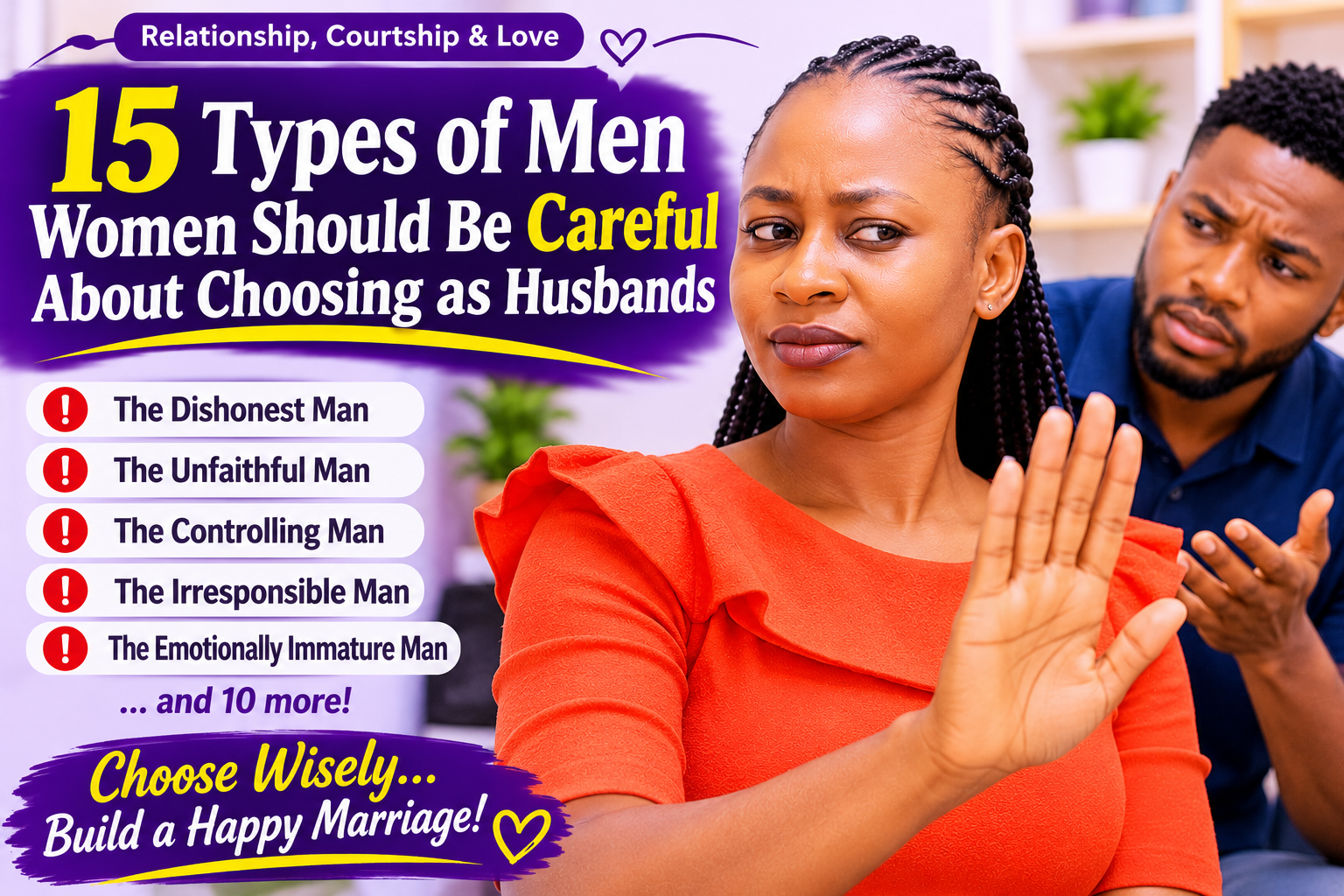
15 Types of Men Women Should Be Careful About Choosing as Husbands
15 Types of Men Women Should Be Careful About Choosing as HusbandsMarriage is more than falling in l...
Read More →
When “We’ll Stop” Stops Working: Why Couples Cross Their Own Sexual Boundaries
Relationships built on clear values often run into a frustrating paradox: decision-making is clear i...
Read More →
7 Essential Topics Couples Must Discuss Before Marriage (Beyond Physical Intimacy)
Entering a life-long partnership is one of the most exciting milestones standard in adult life. Whil...
Read More →
When a Couple Has Already Had Sex Before Marriage: What Next?
Finding yourselves in a position where you have crossed physical boundaries before marriage—or soone...
Read More →