Courtship or Just Dating? Knowing What Your Relationship Is Really About

Two people can spend months together, talk every day, go on dates, share personal experiences and become deeply attached to each other and still have very different ideas about what their relationship means.
One person may think:
We are getting to know each other because we may eventually get married.
The other may think:
We are dating because we enjoy being together. We will see where it goes.
Neither statement automatically makes the relationship wrong. The problem begins when two people have different expectations but never discuss them.
This is why understanding the difference between dating and courtship can be important.
The question is not simply:
Are we together?
It is:
What are we intentionally building together?
What Is Dating?
Dating can generally describe spending time with someone in a romantic context to explore attraction, compatibility and companionship.
Dating does not necessarily mean that marriage has been decided. Two people may date because they enjoy each other's company, feel attracted to each other, want companionship, want to learn more about each other, or are exploring whether they are compatible for a longer-term relationship. They may also be open to marriage without being certain about it yet.
Dating can therefore be a period of discovery.
The important thing is that both people understand what the relationship means to them.
What Is Courtship?
Courtship is often understood as a more intentional relationship in which two people are seriously considering marriage.
The exact meaning of courtship differs between families, cultures, religious communities and individuals. For some people, courtship begins when a couple has moved beyond simply exploring attraction and has decided to seriously evaluate whether they can build a marriage together. For others, courtship may involve greater involvement from families, religious communities or trusted mentors.
There is no single definition that applies to every relationship.
However, one central idea often distinguishes courtship from casual dating:
Intentionality.
Courtship tends to ask:
“Could we build a life together?”
rather than only:
“Do we enjoy being together?”
The Purpose of Courtship
If marriage is the intention, courtship should provide an opportunity for two people to understand each other beyond romantic chemistry.
It is a period of learning.
You are not simply discovering whether someone makes you happy. You are also discovering how they communicate, handle disagreement, treat other people, approach money, view marriage, relate to family, respond to responsibility and envision their future. You may also need to discuss children, faith, personal values and expectations of a spouse.
Romantic feelings are important, but they do not answer all of these questions.
Companionship Is Not the Same as Marriage Intention
One of the most important conversations a couple can have is about why they are together.
A person may genuinely care about their partner but not be thinking about marriage. They may simply enjoy the companionship.
There is nothing inherently wrong with wanting companionship.
The difficulty arises when one person believes the relationship is moving toward marriage while the other person is comfortable keeping it indefinite. Both people may be sincere, but their expectations are different. If they never discuss that difference, emotional attachment can grow while uncertainty remains unresolved.
“We Are Just Dating” Can Mean Different Things
The phrase “we are just dating” can mean many things.
It could mean:
We are getting to know each other before deciding whether marriage makes sense.
Or:
We enjoy each other's company, but I don't know whether I want a serious relationship.
Or:
I am committed to this relationship, but I am not ready to discuss marriage.
Or:
I want the benefits of a relationship without making long-term commitments.
These are very different situations.
That is why labels alone are not enough.
Conversation matters more than assumptions.
When a Relationship Becomes Emotionally Serious
A relationship can become emotionally serious long before the couple has discussed its future.
Daily communication can create attachment. Sharing personal struggles can create vulnerability. Physical affection can create closeness. Spending significant amounts of time together can create a sense of partnership.
Eventually, the couple may begin functioning emotionally like a married couple while still having no shared understanding of where the relationship is going.
This can make future conversations more difficult. The more emotionally invested people become, the harder it may feel to ask uncomfortable questions.
Questions Couples Should Ask
If a relationship is becoming serious, honest conversations can help clarify expectations.
1. What are we looking for?
Are we looking for companionship, a serious relationship, or a relationship that may lead to marriage?
2. What does commitment mean to each of us?
Two people can use the word commitment while meaning completely different things. Discuss what commitment actually looks like.
3. Do we both see marriage as a possibility?
This does not mean that a wedding date needs to be set. It simply establishes whether marriage is part of the future each person is considering.
4. What are our expectations about the timeline?
People have different expectations about how long they want to date before deciding whether to marry. It is useful to discuss those expectations rather than silently assuming that both people think alike.
5. What are our values?
Discuss faith, family, honesty, finances, career, children, lifestyle and other issues that could significantly affect marriage.
6. How do we handle conflict?
You will not agree on everything. Pay attention to how disagreements are handled. Can you discuss difficult issues without insults, threats or manipulation?
7. What boundaries do we want during the relationship?
Boundaries can involve physical intimacy, communication, finances, privacy and time spent together.
8. Are we becoming attached faster than we are getting to know each other?
Emotional closeness can grow quickly while genuine knowledge of someone's character takes much longer.
Don't Let Physical Intimacy Answer Questions That Conversation Should Answer
Physical intimacy can sometimes create a sense of commitment that has not actually been discussed.
A couple may feel extremely close because they spend private time together, kiss, cuddle or have sex.
But physical intimacy does not automatically answer questions such as:
Do we want to marry?
What are our values?
How will we manage money?
Do we want children?
How will we handle family expectations?
What happens when we disagree?
A relationship can feel very serious while still lacking clarity about its future.
That is why couples should allow conversation, character and shared values to inform their decisions—not physical intimacy alone.
Courtship Should Not Become an Interview
Intentionality does not mean turning a relationship into a job interview.
You do not need to spend every date asking serious questions.
Relationships also need:
Laughter
Friendship
Shared experiences
Recreation
Spontaneity
Emotional connection
Enjoyment
The purpose of intentional courtship is not to remove romance.
It is to make sure that romance does not prevent two people from discovering important realities about each other.
What If You Are Not Sure What the Relationship Is?
Sometimes the simplest solution is an honest conversation.
You could say:
I value what we have, and I would like us to talk about what this relationship means to both of us. I don't want either of us to make assumptions about where we are going.
That conversation may produce clarity.
You may discover that you both want the same thing.
You may discover that you need more time.
You may discover that your expectations are different.
All three are useful pieces of information.
Clarity does not always produce the answer we hoped for, but it allows people to make decisions based on reality rather than assumptions.
Don't Confuse Time Together With Progress
A relationship lasting two years does not automatically mean that it is moving toward marriage.
Likewise, a newer relationship is not automatically less serious.
Time and intentionality are different things.
A couple can spend years together without discussing important issues. Another couple can have meaningful conversations about values, expectations and the future much earlier.
The important question is not only:
How long have we been together?
but:
“What have we actually learned about each other during that time?
Courtship Is About Discovery, Not Perfection
Nobody enters marriage with complete knowledge of another person.
People continue to grow and change.
Courtship is therefore not about finding someone who has no weaknesses. It is about learning enough about each other to make a thoughtful decision about whether marriage is appropriate.
That includes seeing both strengths and weaknesses.
It means asking:
Can we communicate?
Can we disagree respectfully?
Can we support each other's growth?
Do our important values align?
Can we build a life that both of us genuinely want?
These questions are often more significant than simply asking whether the relationship feels exciting.
When One Person Wants Marriage and the Other Doesn't
This is one of the situations that requires particular honesty.
A person should not assume that continued dating will eventually change their partner's mind.
Likewise, someone who knows they do not want marriage should be honest rather than allowing their partner to build expectations around an outcome they do not intend.
People can care deeply for each other and still want different futures.
Recognising that difference is not necessarily a failure.
It is information that both people need in order to make their own decisions.
Conclusion
Dating and courtship can take different forms, and there is no universal formula for how every relationship should develop.
What matters is clarity and intentionality.
If you are dating simply to get to know someone, be honest about that.
If you are seriously considering marriage, communicate that intention.
If you are uncertain, it is better to acknowledge the uncertainty than to create expectations you cannot fulfil.
A healthy relationship should give both people room to ask difficult questions, express their expectations and make informed choices.
Because before asking:
Do we love each other?
a couple may also need to ask:
What are we building?
Are we moving in the same direction?
Do our values and expectations allow us to build the kind of future we both want?
Those questions can turn a relationship from simply something you are experiencing into something you are intentionally understanding.
💬 Comments
No comments yet. Be the first to comment!
← Back to Blog📚 Related Articles
Who Do You Call Your Friend? Who Is the Third Person in Your Marriage?
Marriage is designed to bring two people together to build a life, share responsibilities, make deci...
Read More →
Silence in Marriage: Causes, Consequences and Solutions – The Hidden Marriage Killer
Silence in Marriage: Causes, Consequences and Solutions – The Hidden Marriage KillerMarriage is expe...
Read More →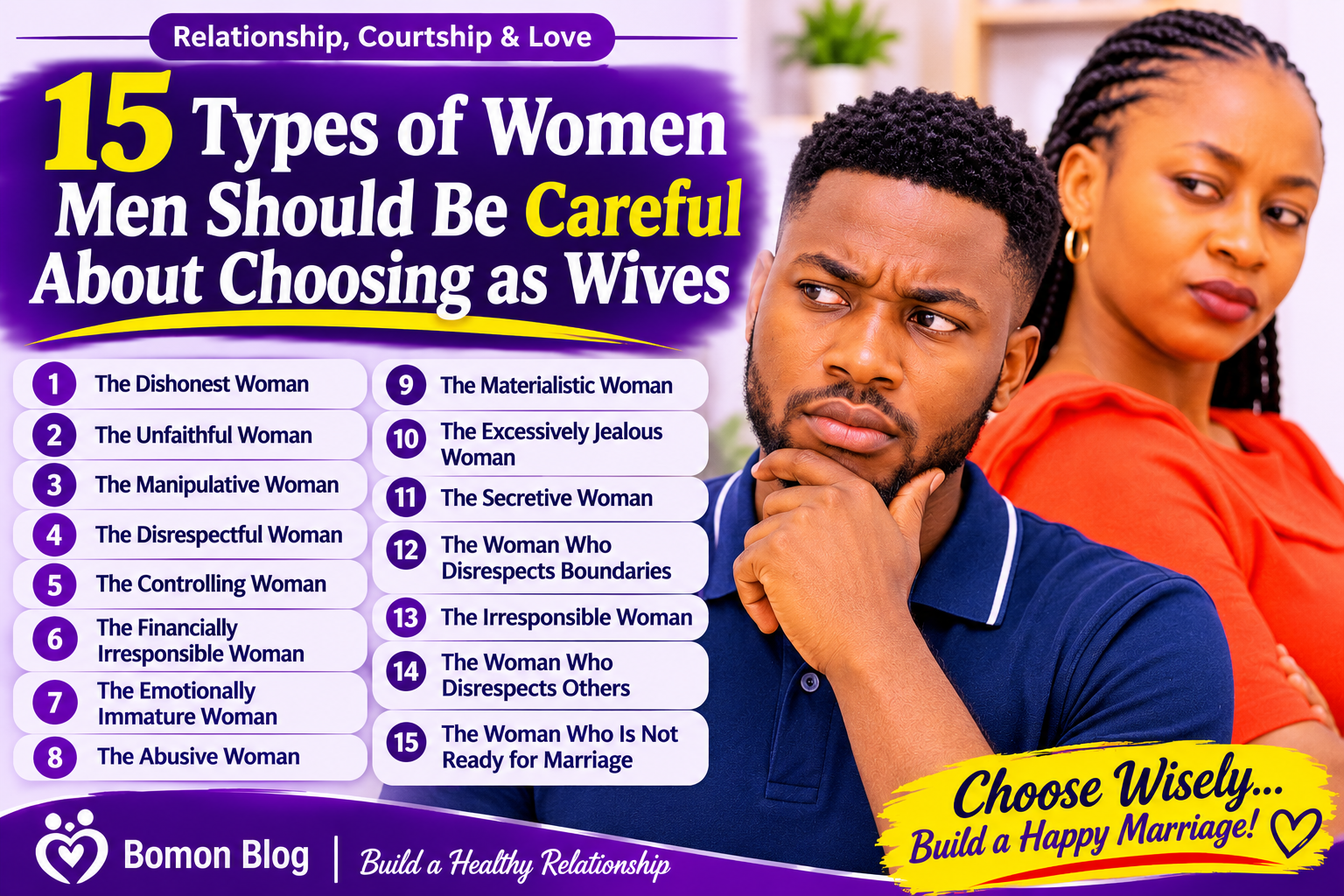
15 Types of Women Men Should Be Careful About Choosing as Wives
15 Types of Women Men Should Be Careful About Choosing as WivesMarriage is one of the most significa...
Read More →
15 Types of Men Women Should Be Careful About Choosing as Husbands
15 Types of Men Women Should Be Careful About Choosing as HusbandsMarriage is more than falling in l...
Read More →
When “We’ll Stop” Stops Working: Why Couples Cross Their Own Sexual Boundaries
Relationships built on clear values often run into a frustrating paradox: decision-making is clear i...
Read More →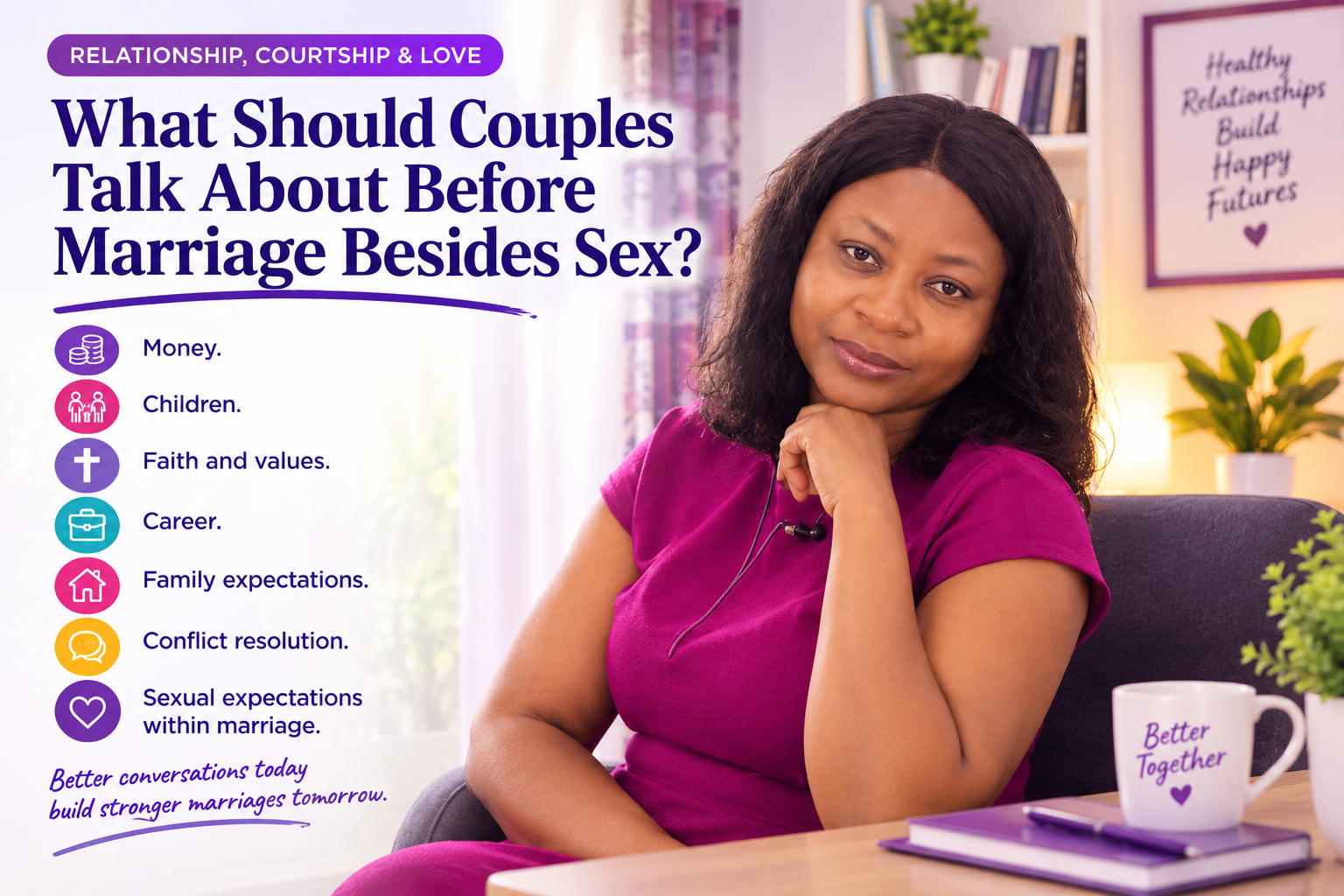
7 Essential Topics Couples Must Discuss Before Marriage (Beyond Physical Intimacy)
Entering a life-long partnership is one of the most exciting milestones standard in adult life. Whil...
Read More →