Courtship Should Reveal Character, Not Just Chemistry
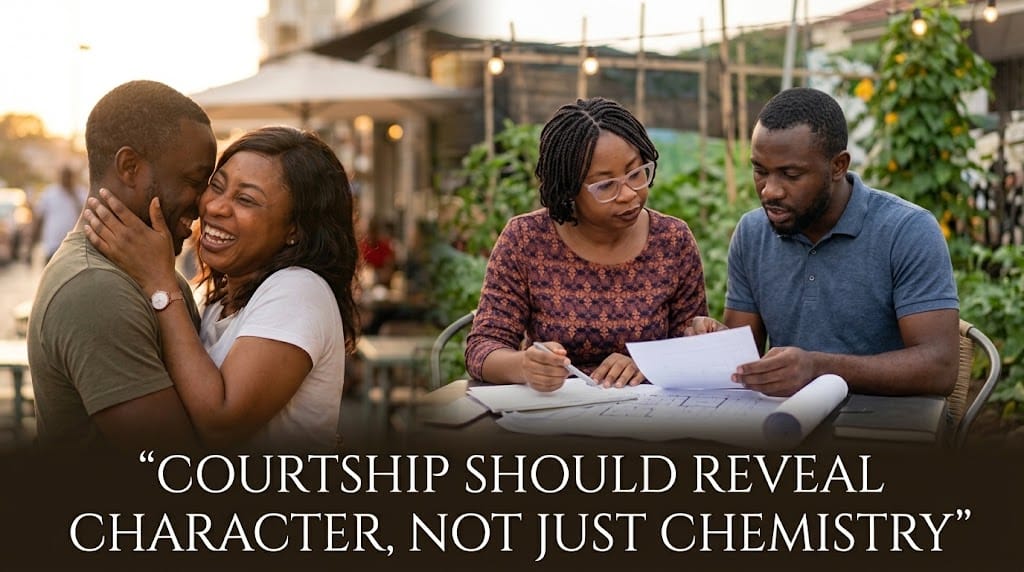
Strong romantic chemistry can make a relationship feel extraordinary.
You enjoy talking to each other. You look forward to seeing each other. Conversations seem effortless. There is physical attraction, emotional excitement and a strong desire to spend more time together.
These experiences can be meaningful.
But chemistry answers only part of the question.
If a relationship may eventually lead to marriage, another question becomes important:
What kind of person am I actually getting to know?
Marriage is not built only on attraction. It involves communication, responsibility, patience, financial decisions, conflict, commitment, family relationships and everyday responsibilities.
This is why courtship should be a period of observation as well as affection.
You are not simply discovering how someone makes you feel.
You are also discovering how that person behaves.
Chemistry Can Attract You; Character Helps You Understand the Person
Chemistry can create a powerful connection between two people.
You may feel comfortable together. You may share similar interests. You may laugh easily and enjoy physical closeness.
But chemistry does not automatically tell you how someone will behave when life becomes difficult.
A person can be charming and still be unreliable.
Someone can be affectionate and still communicate poorly during conflict.
Someone can be exciting to date but irresponsible with money.
Someone can be romantic while treating other people disrespectfully.
This is why attraction should not be confused with compatibility.
Chemistry tells you that you are drawn to someone. Character helps you understand who that person is.
Courtship Is a Time to Observe Patterns
Observing someone's character does not mean treating your partner like an examination subject or looking for perfection.
Everyone makes mistakes.
Everyone has weaknesses.
Everyone can have a bad day.
The more useful question is:
What pattern do I see over time?
Look at how the person behaves repeatedly.
Do their words generally match their actions?
Do they take responsibility when they make mistakes?
Do they listen when you express concerns?
Do they respect boundaries?
Do they treat people well even when they have nothing to gain?
Do they handle responsibilities without constantly needing to be reminded?
Patterns usually tell you more than isolated moments.
1. Observe Their Honesty
Honesty is more than simply avoiding obvious lies.
Pay attention to how a person handles the truth when the truth is uncomfortable.
For example:
Do they admit when they are wrong?
Do they keep their promises?
Do they exaggerate stories to make themselves look better?
Do they hide important information?
Can they acknowledge mistakes without immediately blaming someone else?
Do their explanations remain consistent?
Do they tell you difficult things even when they know you may not like hearing them?
Nobody is perfectly honest in every moment.
The important thing is how someone responds when honesty costs them something.
A person who can acknowledge a mistake and take responsibility demonstrates something different from someone who continually creates excuses.
2. Observe Responsibility
Responsibility becomes particularly important when considering marriage because married life involves many practical obligations.
During courtship, observe how a person handles the responsibilities they already have.
Do they show up when they say they will?
Do they complete tasks without constantly being reminded?
Do they take their work seriously?
Do they keep commitments?
How do they handle responsibilities toward family, work, education, business or other important areas of life?
You do not need to expect perfection.
Instead, look for reliability and accountability.
Someone who makes a mistake but takes responsibility may demonstrate more maturity than someone who rarely admits fault.
3. Observe Their Patience
Patience is easy to display when everything is going well.
It becomes more visible when something goes wrong.
Watch how the person behaves when:
Plans change.
They have to wait.
Someone disagrees with them.
They are frustrated.
They are tired.
They experience inconvenience.
Something does not happen according to their expectations.
How do they respond?
Do they become insulting?
Do they withdraw completely?
Do they become aggressive?
Or can they communicate their frustration without disrespecting others?
You are not looking for someone who never becomes frustrated.
You are learning how they manage frustration.
4. Observe Their Financial Habits
Money can become a significant part of married life.
During courtship, couples should therefore learn about each other's attitudes toward money.
This does not mean demanding access to someone's private financial information.
It means having honest conversations and observing responsible behaviour.
Consider questions such as:
Does the person generally live within their means?
Do they plan before spending?
Do they distinguish needs from wants?
Do they save?
How do they approach debt?
Are they transparent about significant financial responsibilities?
Do they constantly spend to impress others?
Do they expect their partner to finance their lifestyle?
People have different incomes and different financial circumstances.
A person's financial situation alone does not determine their character.
What can be revealing is their attitude toward responsibility, honesty, planning and stewardship.
5. Observe Their Communication
Good communication is not simply talking frequently.
It includes listening, explaining, asking questions, expressing concerns and handling disagreement.
Pay attention to what happens when you disagree.
Can you say:
I don't agree with you
without the conversation becoming hostile?
Can your partner listen without immediately becoming defensive?
Can you discuss sensitive subjects?
Can they tell you what they need without expecting you to guess?
Can they apologise?
Can they have a difficult conversation without insulting or humiliating you?
Communication during peaceful moments is important.
Communication during conflict can reveal even more.
6. Observe How They Treat Other People
One of the most revealing ways to understand someone's character is to observe how they treat people from whom they have nothing to gain.
Watch how they interact with:
Waiters and service workers.
Drivers.
Colleagues.
Security personnel.
Family members.
Friends.
Strangers.
People who disagree with them.
A person may be exceptionally polite to their romantic partner while treating everyone else with contempt.
That contrast is worth noticing.
Ask yourself:
Is their kindness consistent, or is it reserved for people they want something from?
How someone treats others does not provide a complete picture of their character, but it can provide useful information.
7. Watch How They Handle Conflict
You cannot build a long-term relationship without disagreements.
Two people will eventually have different opinions, expectations or preferences.
The important issue is not whether conflict occurs.
It is how conflict is handled.
During disagreements, observe whether the person:
Listens.
Explains their position.
Takes responsibility.
Attempts to understand your perspective.
Looks for solutions.
Uses insults.
Threatens to end the relationship to gain control.
Uses silent treatment as punishment.
Brings up unrelated past mistakes to win an argument.
A disagreement can reveal how someone responds when they do not get their way.
That can be more informative than how they behave on a perfect date.
8. Observe Whether Words Match Actions
Someone can say:
I respect you.
But what happens when you establish a boundary?
Someone can say:
You can always depend on me.
But what happens when you actually need help?
Someone can say:
Family is important to me.
But how do they treat their own family?
Someone can say:
I want a peaceful marriage.
But how do they behave during disagreement?
The consistency between words and actions is worth paying attention to.
Promises are important.
Patterns of behaviour are also important.
9. Observe How They Respond to Boundaries
Healthy relationships require respect for personal boundaries.
You should be able to say:
I'm not comfortable with that.
I need some time.
I don't agree.
I don't want to do that.
Let's discuss this later.
Observe the response.
Respect does not mean that your partner must agree with everything you say.
It means they can disagree without attempting to force, manipulate or punish you.
A person's response to a boundary can tell you something about how they understand respect and mutual decision-making.
10. Don't Ignore the Ordinary Moments
Character is not revealed only during dramatic situations.
Sometimes it appears in ordinary moments.
How does the person behave when there is nothing exciting happening?
How do they spend their free time?
How do they handle small responsibilities?
How do they speak when they are not trying to impress you?
How do they respond when plans are inconvenient?
How do they treat people when they think nobody important is watching?
Courtship provides opportunities to see these ordinary moments.
Why Strong Chemistry Alone Does Not Establish Marital Compatibility
Romantic chemistry can be powerful.
It can make two people feel deeply connected.
But marriage requires more than emotional excitement.
Two people may have excellent chemistry and still disagree fundamentally about:
Money.
Children.
Faith.
Family responsibilities.
Career priorities.
Communication.
Lifestyle.
Where to live.
Expectations of marriage.
Personal boundaries.
Household responsibilities.
None of these issues necessarily eliminates a relationship.
But they need to be discussed.
A strong emotional connection can sometimes make people reluctant to examine important differences because they do not want to disturb the excitement of the relationship.
That is why courtship should include both connection and examination.
Not examination in the sense of judging someone harshly, but in the sense of honestly learning whether two lives can work together.
Chemistry Can Change; Character Still Matters
The intensity of romantic feelings can change over time.
The early excitement of a relationship may eventually become something quieter and more familiar.
Marriage can also involve seasons when life is difficult:
Financial pressure.
Career changes.
Illness.
Family responsibilities.
Parenting.
Relocation.
Disappointment.
Stress.
Grief.
During such periods, attraction may not be enough to carry the relationship.
Patience, honesty, responsibility, communication and mutual respect become especially important.
This is one reason courtship should not focus exclusively on how intensely two people feel about each other.
It should also explore how they function together.
Don't Look for Perfection
Observing character does not mean searching for someone without flaws.
That person does not exist.
A mature approach is to distinguish between:
A mistake and a pattern.
A weakness and a refusal to grow.
A disagreement and a lack of respect.
A financial difficulty and financial irresponsibility.
A bad day and a consistent pattern of harmful behaviour.
The goal is not to find perfection.
It is to understand reality.
Questions to Ask During Courtship
Couples can intentionally discuss questions such as:
Character
What does honesty mean to you?
How do you respond when you realise you are wrong?
What responsibilities are most important to you?
Communication
How do you normally handle disagreements?
What makes you feel heard?
How should we approach difficult conversations?
Money
What are your financial priorities?
How do you approach saving and spending?
What are your views about debt?
What financial responsibilities do you expect within marriage?
Family
What role should extended family play in a marriage?
What have you learned from your family relationships?
Future
Do you want children?
What kind of life do you want to build?
What role should career play in your future family?
Boundaries
What boundaries are important to you?
How should we respond when one of us says no?
What does respect look like in a relationship?
These conversations are not guarantees of marital success.
They simply create opportunities for greater clarity.
Let Courtship Reveal the Whole Person
It is easy to fall in love with someone's best presentation.
Dates are usually planned.
People often dress well.
They are attentive.
They make an effort to impress each other.
But marriage involves the whole person—not just the version that appears on a romantic date.
Courtship should therefore provide opportunities to see each other in different circumstances.
Not by deliberately creating stressful situations, but by allowing the relationship to develop naturally enough for real personality, habits and values to become visible.
The objective is not to catch someone doing something wrong.
It is to get to know the person honestly.
Conclusion
Courtship should be more than a period of intense romantic feelings.
It can be a period of discovery—a time to learn about someone's character, values, habits and approach to life.
Chemistry may bring two people together.
But honesty helps build trust.
Responsibility helps build reliability.
Patience helps people navigate difficult seasons.
Healthy financial habits help couples manage practical responsibilities.
Good communication helps them understand one another.
Respect for others reveals something about character.
None of these qualities guarantees a successful marriage. But they are important areas for couples to understand before making significant long-term commitments.
So while asking:
How strongly are we attracted to each other?
also ask:
How does this person behave when life is difficult?
Can we communicate honestly?
Can we handle disagreement respectfully?
Do their actions generally match their words?
Do we share important values and expectations?
Because courtship should not only reveal how you feel about each other.
It should also help you discover who you are getting to know.
💬 Comments
No comments yet. Be the first to comment!
← Back to Blog📚 Related Articles
Who Do You Call Your Friend? Who Is the Third Person in Your Marriage?
Marriage is designed to bring two people together to build a life, share responsibilities, make deci...
Read More →
Silence in Marriage: Causes, Consequences and Solutions – The Hidden Marriage Killer
Silence in Marriage: Causes, Consequences and Solutions – The Hidden Marriage KillerMarriage is expe...
Read More →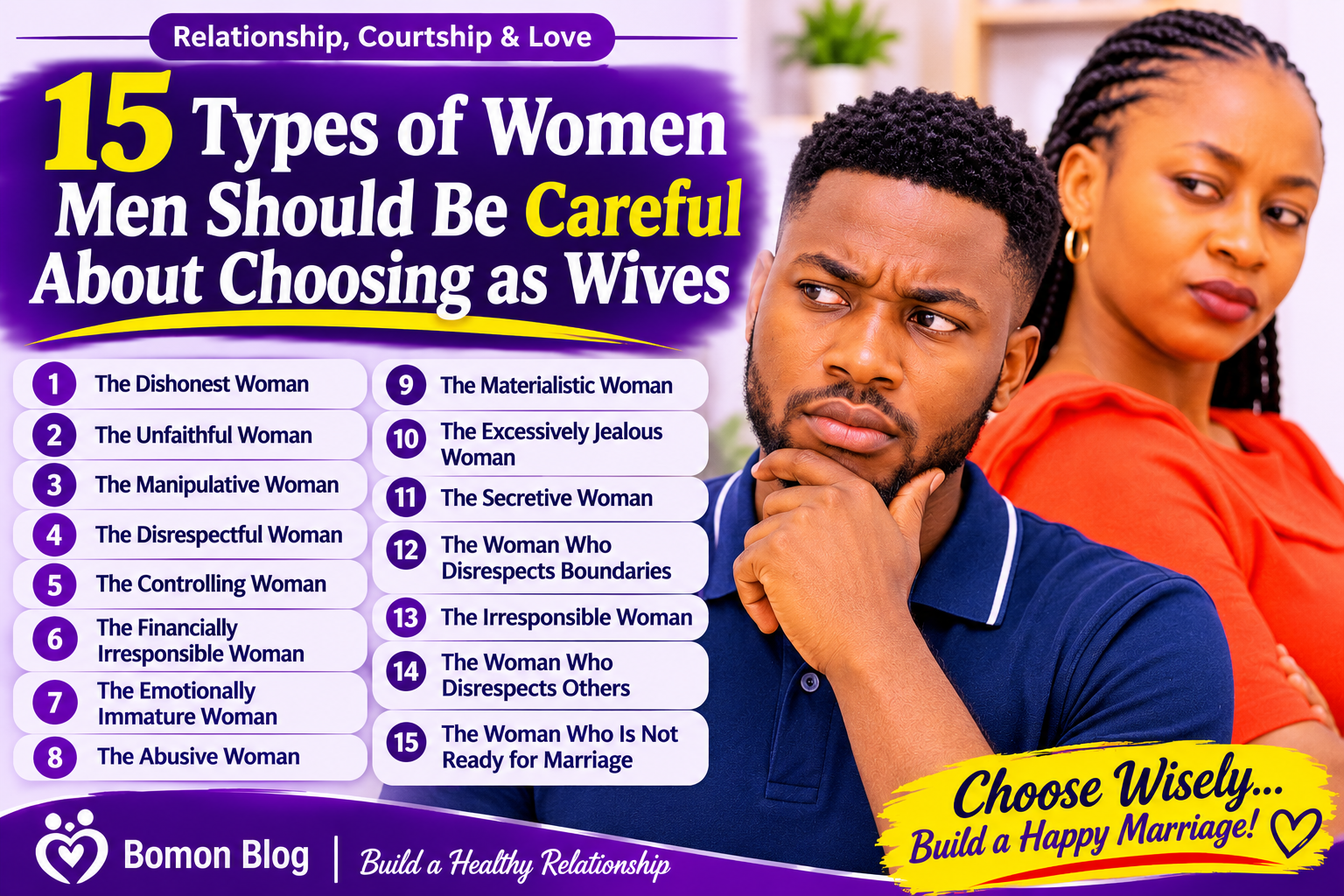
15 Types of Women Men Should Be Careful About Choosing as Wives
15 Types of Women Men Should Be Careful About Choosing as WivesMarriage is one of the most significa...
Read More →
15 Types of Men Women Should Be Careful About Choosing as Husbands
15 Types of Men Women Should Be Careful About Choosing as HusbandsMarriage is more than falling in l...
Read More →
When “We’ll Stop” Stops Working: Why Couples Cross Their Own Sexual Boundaries
Relationships built on clear values often run into a frustrating paradox: decision-making is clear i...
Read More →
7 Essential Topics Couples Must Discuss Before Marriage (Beyond Physical Intimacy)
Entering a life-long partnership is one of the most exciting milestones standard in adult life. Whil...
Read More →