If We Love Each Other, Why Wait? — Understanding the Argument for Sex Before Marriage
For some couples, the decision to wait until marriage before having sex can feel increasingly difficult as their relationship becomes deeper. They may ask a simple but significant question: “If we genuinely love each other, trust each other, and intend to spend our lives together, why should we wait?”
It is a question that sits at the intersection of love, sexuality, commitment, faith, culture, and personal conviction.
People do not all arrive at the same answer. Some believe sexual intimacy belongs exclusively within marriage. Others believe that a committed relationship can provide the context for sexual intimacy even before a wedding takes place. Still others are uncertain and are trying to reconcile their desires with their beliefs.
Understanding the argument requires more than simply saying that one side is right and the other is wrong. It requires examining why couples think the way they do.
1. We Love Each Other
One of the most common arguments is based on love.
A couple may reason:
“We are not using each other. We genuinely love each other.”
For them, sex is viewed as an expression of affection, closeness, vulnerability, and emotional connection. If they already share their hopes, fears, plans, finances, families, and everyday lives, sexual intimacy may seem like a natural extension of their relationship.
However, love and sexual intimacy are related without necessarily being identical.
A person can genuinely love another person while still choosing boundaries around sex. Likewise, sexual intimacy can exist without the same level of emotional commitment that a couple associates with love.
The important question is therefore not only “Do we love each other?”, but also “What does our understanding of love require of us?”
2. We Are Already Committed
Another common argument is commitment.
Some couples consider themselves practically married even though they have not had a formal wedding. They may have been together for years, introduced each other to their families, made long-term plans, or agreed that they intend to marry.
From this perspective, waiting for the wedding ceremony may feel like waiting for a legal or social event rather than waiting for commitment itself.
But commitment can have different meanings.
For one person, commitment may mean an intention to marry. For another, it may mean a formal marriage covenant. Another person may distinguish emotional commitment from legal and spiritual commitment.
This difference in definitions can significantly affect how couples approach sexual boundaries.
3. We Trust Each Other
Trust is another important part of the discussion.
Couples who have built a strong relationship may feel that sexual intimacy is safe because they trust each other emotionally and physically.
They may say:
“If I cannot trust the person I intend to marry, then who can I trust?”
Trust can certainly strengthen a relationship. However, trust does not eliminate the possibility of disagreements, changing circumstances, disappointment, or unexpected consequences.
A healthy relationship requires couples to discuss expectations honestly rather than assuming that trust means they will always make the same decisions.
4. Sexual Desire Is Natural
Sexual desire is a normal part of human experience. Couples who are deeply attracted to each other may find it difficult to ignore that desire, particularly when emotional intimacy is already strong.
The argument often sounds like this:
“We are attracted to each other, we are adults, and we both want this. Why should we pretend the desire does not exist?”
Acknowledging sexual desire is different from deciding what to do with it.
Every relationship has boundaries. Couples make decisions about money, communication, privacy, friendships, family involvement, and many other areas. Sexual desire can likewise be acknowledged without automatically determining the couple's decision.
The more useful question may be:
“How do we want to handle our sexual desire in a way that is consistent with the values we have chosen?”
5. Christian Perspectives
Christian perspectives on sex before marriage are generally shaped by biblical teachings about sexual morality, marriage, holiness, and the purpose of sexual intimacy.
Many Christians understand sex as something designed for the marriage relationship and therefore choose abstinence before marriage. For them, waiting is not simply about avoiding an activity; it is an expression of obedience, spiritual conviction, and the belief that sexual intimacy belongs within marriage.
At the same time, Christians may differ in how they understand relationships, courtship, engagement, marriage, and practical boundaries.
Some emphasize strict physical boundaries. Others focus more heavily on the couple's intentions, maturity, responsibility, and commitment.
Because Christianity contains different denominations and traditions, it is important not to assume that every Christian approaches the subject in exactly the same way.
For a Christian couple, the central question may therefore be:
“What does our faith teach us, and are we willing to live according to that conviction even when it is difficult?”
6. Cultural Perspectives
Culture also influences attitudes toward sex and marriage.
In some communities, sexual intimacy before marriage is strongly discouraged because marriage is regarded as the appropriate social and family context for sexual relationships.
In other communities, attitudes are more permissive, particularly where marriage is viewed as a personal decision rather than primarily a family or community institution.
African cultures, for example, contain many different traditions and expectations surrounding courtship, bride price, family approval, marriage, and sexual relationships. Even within the same country, attitudes can differ significantly between families, generations, religious communities, and individuals.
Therefore, what one person considers normal may be completely different from another person's understanding.
7. Personal Convictions Matter
Beyond religion and culture, individuals also have personal convictions.
Someone may choose to wait because they believe sex should be reserved for marriage. Another person may decide differently because their personal understanding of relationships does not require waiting.
The important issue is whether the decision is genuinely shared.
Sexual intimacy should not become a test of love.
Statements such as “If you really love me, you would do this” can turn affection into pressure. Likewise, “If you really loved me, you would wait” can also become a form of emotional pressure.
A healthy relationship allows both people to express their convictions honestly.
8. Love Does Not Remove the Need for Difficult Conversations
Before becoming sexually intimate, couples should be able to talk openly about their expectations and boundaries.
Questions worth discussing include:
What does sex mean to each of us?
How does our faith influence our decision?
What does commitment mean to us?
Are we both genuinely comfortable with this decision?
Are either of us feeling pressured?
How would we feel if our relationship ended?
How do we understand responsibility and consequences?
What boundaries do we want in our relationship?
Are our values actually compatible?
These conversations may feel uncomfortable, but avoiding them can create greater difficulties later.
9. The Question Behind the Question
Sometimes “Why wait?” is not really a question about sex.
It may be a question about whether the relationship is serious.
It may be a question about whether the couple trusts each other.
It may be a question about whether marriage is necessary for demonstrating commitment.
It may also be a question about how religious beliefs should influence a modern relationship.
Understanding the question underneath the question can help couples have a much more meaningful conversation.
10. There Is More Than One Perspective
The conversation about sex before marriage cannot be reduced to one universal experience.
For some couples, waiting is an important expression of faith and personal conviction. For others, sexual intimacy is understood as part of a committed relationship before marriage. Some people remain uncertain and need time to think through their beliefs.
What matters is that decisions about intimacy should involve mutual consent, honesty, respect, responsibility, and freedom from coercion.
Love deserves honest conversations.
Commitment deserves clarity.
Trust deserves consistency.
And sexual decisions deserve thoughtful consideration rather than pressure or assumptions.
Conclusion
“If we love each other, why wait?” is a question many couples eventually confront.
The answer depends partly on what the couple believes marriage means, what role sex plays in a relationship, how their faith or culture shapes their values, and what personal convictions they are prepared to live by.
For some, waiting is an important part of expressing love and faith. For others, the decision is understood differently.
Ultimately, the healthiest relationships are not built simply on desire. They are built through honest communication, mutual respect, responsibility, shared values, and the freedom for both people to make decisions without manipulation or pressure.
Before asking only “Why wait?”, couples may benefit from asking a deeper question:
“What kind of relationship do we want to build, and what choices are consistent with the values we both believe in?”
💬 Comments
No comments yet. Be the first to comment!
← Back to Blog📚 Related Articles
Who Do You Call Your Friend? Who Is the Third Person in Your Marriage?
Marriage is designed to bring two people together to build a life, share responsibilities, make deci...
Read More →
Silence in Marriage: Causes, Consequences and Solutions – The Hidden Marriage Killer
Silence in Marriage: Causes, Consequences and Solutions – The Hidden Marriage KillerMarriage is expe...
Read More →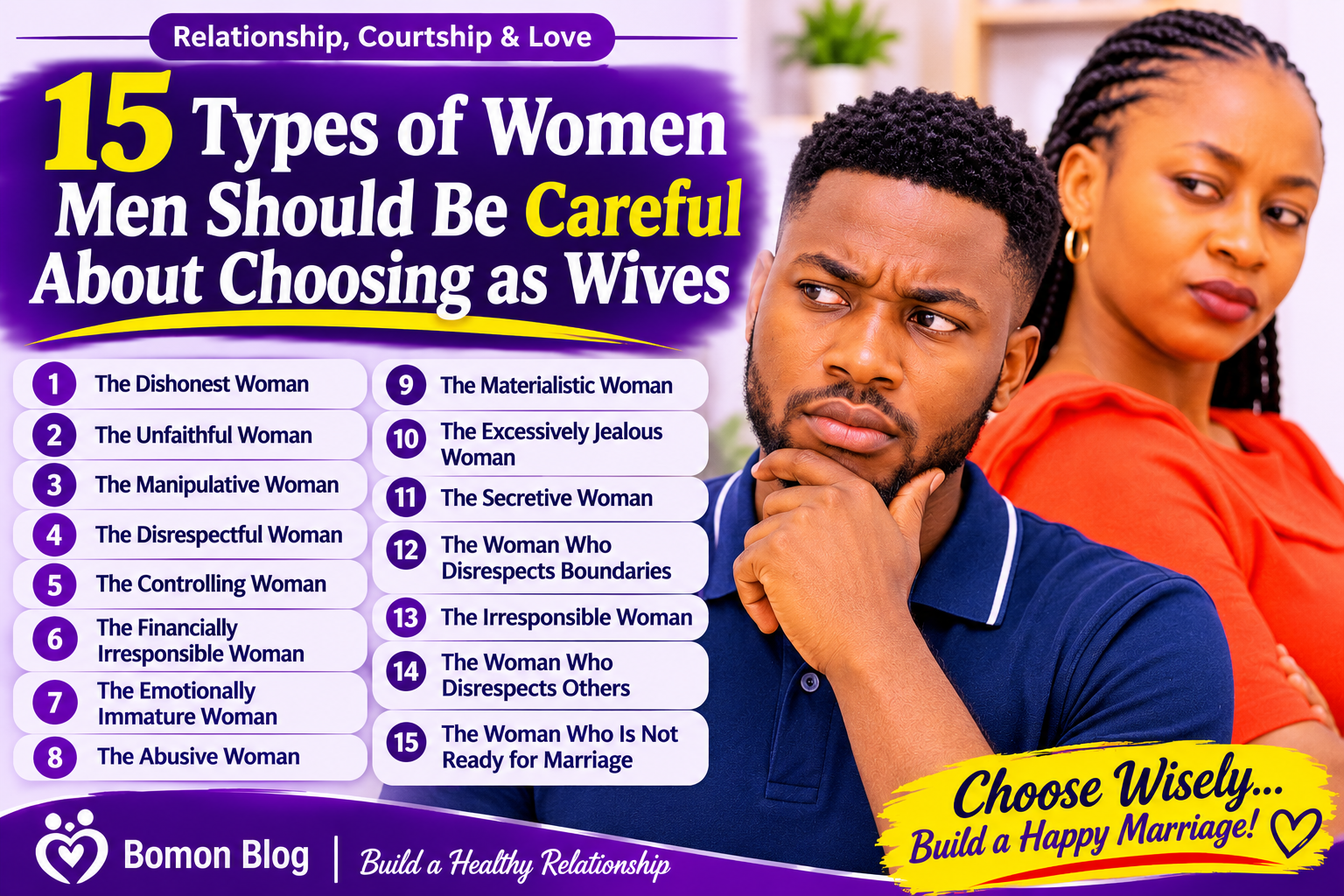
15 Types of Women Men Should Be Careful About Choosing as Wives
15 Types of Women Men Should Be Careful About Choosing as WivesMarriage is one of the most significa...
Read More →
15 Types of Men Women Should Be Careful About Choosing as Husbands
15 Types of Men Women Should Be Careful About Choosing as HusbandsMarriage is more than falling in l...
Read More →
When “We’ll Stop” Stops Working: Why Couples Cross Their Own Sexual Boundaries
Relationships built on clear values often run into a frustrating paradox: decision-making is clear i...
Read More →
7 Essential Topics Couples Must Discuss Before Marriage (Beyond Physical Intimacy)
Entering a life-long partnership is one of the most exciting milestones standard in adult life. Whil...
Read More →