Incompatibility in Relationships: When Love Is Not Enough
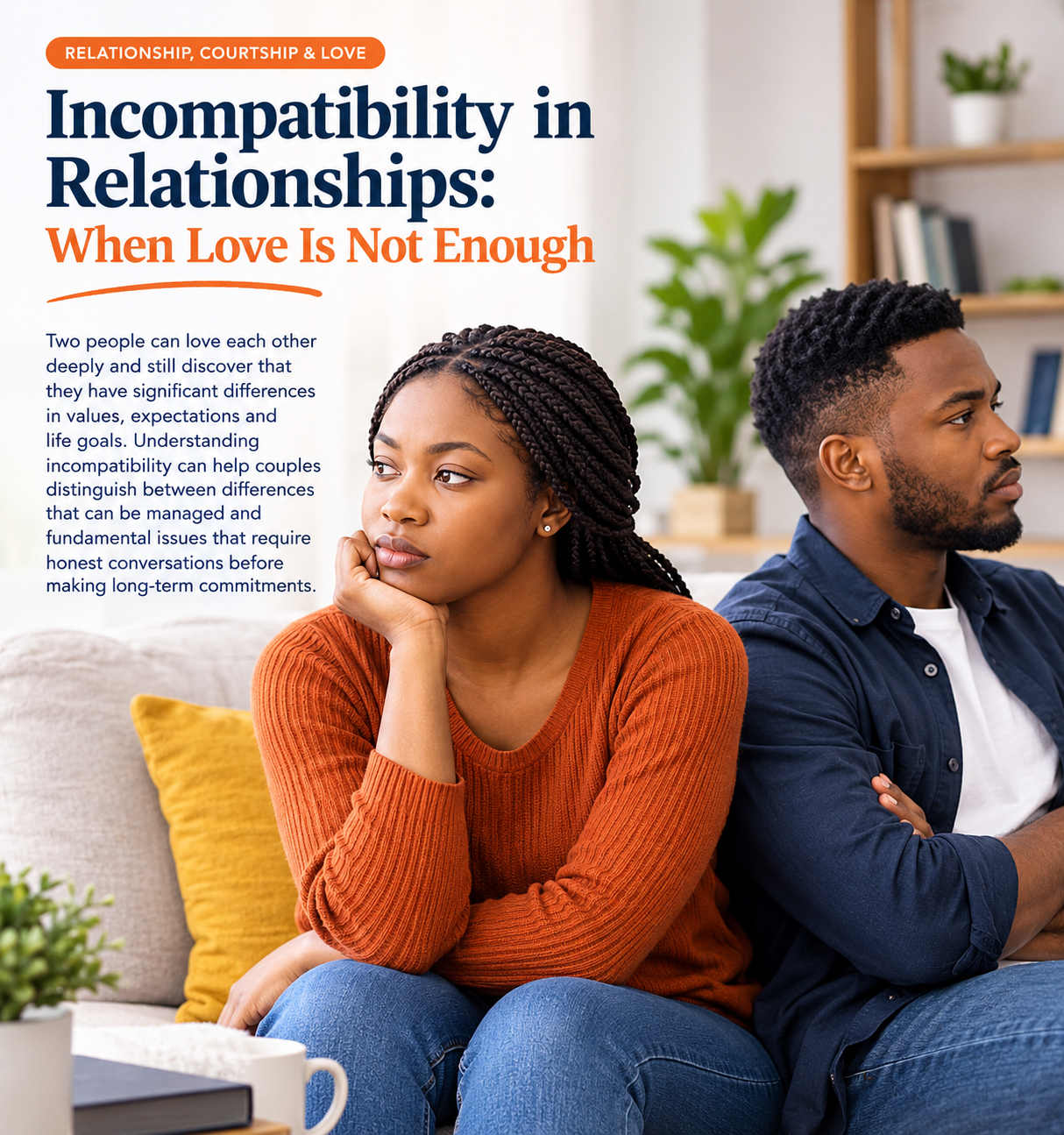
Incompatibility in Relationships: When Love Is Not Enough
Love can bring two people together, but love alone does not automatically make two people compatible.
You can genuinely care about someone, enjoy their company, feel strongly attracted to them and still discover that you have significant differences in the way you understand life, marriage and the future.
This does not mean that the relationship was meaningless.
It means that love and compatibility are not exactly the same thing.
A relationship requires more than strong feelings. It also requires two people to understand their differences, communicate about them and determine whether they can build a life together without constantly compromising the things that matter most to them.
What Does Incompatibility Mean?
Relationship incompatibility occurs when important differences between two people make it difficult for them to function well together or build the kind of future they both want.
Not every difference is incompatibility.
Two people can have different personalities, interests, tastes and habits and still have a healthy relationship.
One person may enjoy going out while the other prefers staying at home.
One may be very talkative while the other is naturally quiet.
One may enjoy travelling while the other prefers a quieter lifestyle.
These differences do not necessarily threaten a relationship.
The more important question is:
Can we have these differences and still respect, understand and support each other?
Not Every Difference Is a Problem
A healthy relationship does not require two people to be identical.
In fact, differences can sometimes complement each other.
The problem arises when the differences concern issues that are fundamental to the relationship and neither person can genuinely accept the other's position.
For example, a couple may disagree about what restaurant to visit.
That is a minor difference.
But disagreement about whether to have children is a much more significant issue.
Likewise, different preferences about entertainment may be easy to manage, while completely different expectations about money, faith or marriage may require much deeper discussion.
The issue is therefore not simply:
“Are we different?”
The better question is:
How important are our differences, and can we realistically live with them?
1. Differences in Core Values
Values influence how people make decisions and understand what is important in life.
Two people may love each other while having significantly different values concerning:
Honesty
Family
Responsibility
Faith
Work
Money
Children
Loyalty
Lifestyle
Personal boundaries
For example, one person may consider financial responsibility extremely important while the other has a very relaxed approach to spending and saving.
One person may consider family involvement in marriage essential, while the other strongly prefers complete independence from extended family.
Neither person necessarily has to be a bad person.
They may simply have different expectations about how life should work.
The important thing is to recognise these differences before marriage rather than assuming love will automatically resolve them.
2. Communication Incompatibility
Communication is one of the areas where differences can become particularly noticeable.
One person may want to discuss every problem immediately.
The other may need time alone before discussing difficult issues.
One person may express emotions openly.
The other may find emotional conversations uncomfortable.
These differences can sometimes be managed through understanding and communication.
But persistent communication problems can become exhausting when neither person is willing to understand the other's needs.
A couple should therefore ask:
Can we talk about difficult things without constantly hurting each other?
Can we listen as well as speak?
Can we disagree without turning every disagreement into a major conflict?
3. Financial Incompatibility
Money is another area where couples can have very different expectations.
Consider two people who fall deeply in love but have completely different financial habits.
One saves carefully and plans for the future.
The other spends impulsively and believes money should be enjoyed whenever it is available.
One wants to avoid debt.
The other is comfortable borrowing.
One expects couples to combine their finances.
The other expects complete financial independence.
These differences do not automatically mean that a relationship cannot work.
However, they need to be discussed honestly.
Marriage can involve shared expenses, savings, investments, housing, children and unexpected financial responsibilities.
Love does not eliminate financial differences.
Conversation, planning and mutual understanding are necessary.
4. Differences in Faith and Beliefs
Faith can be deeply personal and can influence important decisions about marriage, children, family life and personal conduct.
Couples with different religious or spiritual beliefs may have a healthy relationship, but they should not assume that their differences will automatically disappear after marriage.
Questions worth discussing include:
How important is faith to each person?
What role will religion play in the home?
How will children be raised?
How will religious celebrations be handled?
How will major decisions involving faith be approached?
The goal is not necessarily to eliminate every difference.
It is to understand what those differences could mean for the future.
5. Family Expectations
Marriage can bring two families into close contact.
People can have very different expectations about family involvement.
One person may expect frequent visits and strong involvement from parents and relatives.
Another may prefer significant privacy.
One may expect financial support for extended family.
The other may believe that a married couple should prioritise their household financially.
These expectations can become a source of conflict if they are never discussed.
Before marriage, couples should talk openly about family boundaries, responsibilities and expectations.
6. Different Life Goals
Sometimes two people love each other but are moving toward different futures.
One wants to remain in their hometown.
The other wants to relocate abroad.
One wants several children.
The other does not want children.
One wants to focus heavily on career development.
The other expects a lifestyle centred around family.
One wants to build a business.
The other prefers stable employment.
These are not small matters.
They affect the direction of an entire life.
A couple therefore needs to ask:
If we both get the future we want, will those futures actually fit together?
When Unresolved Differences Become Conflict
Differences themselves do not necessarily destroy relationships.
Unresolved differences can.
When couples repeatedly avoid difficult conversations, the same disagreement can appear in different forms.
A disagreement about money becomes an argument about trust.
A disagreement about family becomes an argument about loyalty.
A disagreement about communication becomes an argument about respect.
Eventually, the couple may stop discussing the original issue and start attacking each other's character.
This is why difficult conversations are often better addressed early.
Why Strong Attraction Does Not Guarantee Compatibility
Romantic attraction can be powerful.
It can make someone feel uniquely special.
You may think:
“I have never felt this way about anyone before.”
That feeling can be genuine.
But attraction does not automatically tell you whether two people can manage everyday responsibilities together.
You can have strong chemistry with someone and still have completely different expectations about marriage.
You can love someone and still disagree about children.
You can have a wonderful emotional connection and still struggle to communicate during conflict.
You can be deeply attracted to someone whose financial habits are completely incompatible with yours.
This is why chemistry should be appreciated, but not mistaken for a complete assessment of compatibility.
Questions Couples Should Ask Before Marriage
Before making a serious commitment, couples should create space for honest conversations.
About values
What principles are most important to you?
What does loyalty mean to you?
What does a successful marriage look like to you?
About communication
How do you prefer to resolve disagreements?
What happens when you are angry?
How should we approach difficult conversations?
About money
How do you manage money?
What are your financial priorities?
What are your expectations about shared expenses?
How do you feel about debt and saving?
About children
Do you want children?
How many children would you ideally like?
What kind of parenting do you believe in?
About family
How involved should extended family be?
What responsibilities do we have toward our families?
What boundaries should exist between our marriage and extended family?
About faith
What role will faith play in our marriage?
How should children be raised regarding religion and beliefs?
About the future
Where do you want to live?
What are your career goals?
What kind of lifestyle do you want?
What does marriage mean to you?
These conversations may not always produce identical answers.
They are meant to produce clarity.
Can Incompatibility Be Managed?
Some differences can absolutely be managed.
Couples can learn to compromise.
They can develop new communication habits.
They can establish financial systems.
They can negotiate responsibilities.
They can learn to respect differences in personality and preferences.
But compromise has limits.
Compromise should not mean that one person repeatedly abandons deeply held values simply to keep the relationship alive.
There is a difference between saying:
I prefer things differently, but I can work with your preference.
and:
This goes against something fundamental to who I am, but I feel pressured to accept it because I love you.
Understanding that difference is important.
When Differences Require Serious Consideration
Some differences deserve particularly careful consideration before marriage.
These can include fundamental disagreements about:
Whether to marry
Whether to have children
Major religious convictions
Financial responsibility
Fidelity and commitment
Where to live
Major family responsibilities
Expectations about gender or household roles
Substance use
Respect and personal boundaries
The existence of a disagreement does not automatically determine what a couple should do.
What matters is whether both people can honestly accept the difference and build a mutually workable arrangement.
Don't Assume Marriage Will Change Someone
One of the most common mistakes couples can make is believing that marriage will automatically change a partner.
A person who currently avoids financial responsibility may not suddenly become financially responsible because they get married.
Someone who refuses to communicate may not automatically become an excellent communicator after the wedding.
Someone who does not want children may not necessarily change their mind later.
Marriage can provide opportunities for growth, but it should not be entered with the assumption that a partner must become a different person for the marriage to work.
Pay attention to who the person is now, not only who you hope they will become.
Love Should Allow Honest Questions
Sometimes people avoid difficult conversations because they are afraid that asking serious questions will damage the relationship.
But a relationship that may lead to marriage needs room for honest discussion.
You should be able to ask:
What do you really want?
How do you see marriage?
What are your expectations?
What are the things you cannot compromise on?
Where do you think we are different?
These questions are not attacks.
They are opportunities to understand one another.
Compatibility Does Not Mean Being Identical
A compatible couple does not necessarily agree about everything.
Compatibility is not about finding someone who thinks exactly like you.
It is about understanding whether your important differences can coexist within a healthy relationship.
Two people can have different personalities and still communicate well.
They can have different interests and still enjoy life together.
They can approach problems differently and still respect one another.
The goal is not sameness.
The goal is a workable and respectful partnership.
Conclusion: Love Deserves Clarity
Love is valuable.
Attraction is valuable.
Emotional connection is valuable.
But when a relationship is moving toward marriage, couples need more than strong feelings.
They need to understand their values, expectations, communication styles, financial habits, family relationships, beliefs and long-term goals.
Some differences can be negotiated.
Some require patience and understanding.
Others may reveal that two people want fundamentally different futures.
The purpose of examining compatibility is not to create fear or make couples search for reasons to separate.
It is to encourage honesty.
Because it is better to discover important differences through honest conversations during courtship than to discover them after marriage when expectations, responsibilities and circumstances have become much more complicated.
In the end, an important question is not simply:
“Do we love each other?”
It is also:
Can we build the kind of life we both want, while respecting who we each are?
Love may bring two people together.
Understanding whether they are compatible helps them understand what they can realistically build together.
💬 Comments
Very fantastic writeup
1 month ago📚 Related Articles
Who Do You Call Your Friend? Who Is the Third Person in Your Marriage?
Marriage is designed to bring two people together to build a life, share responsibilities, make deci...
Read More →
Silence in Marriage: Causes, Consequences and Solutions – The Hidden Marriage Killer
Silence in Marriage: Causes, Consequences and Solutions – The Hidden Marriage KillerMarriage is expe...
Read More →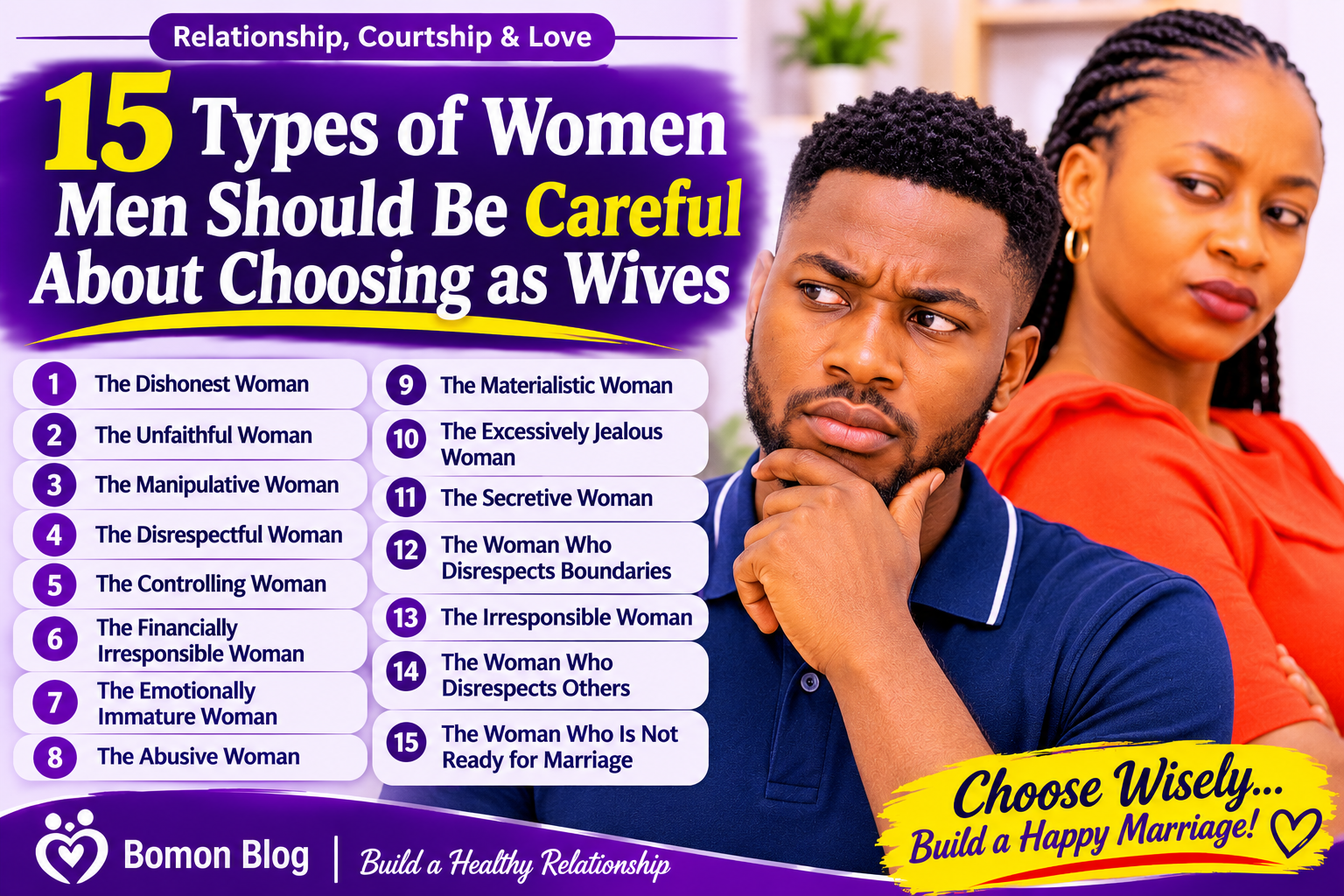
15 Types of Women Men Should Be Careful About Choosing as Wives
15 Types of Women Men Should Be Careful About Choosing as WivesMarriage is one of the most significa...
Read More →
15 Types of Men Women Should Be Careful About Choosing as Husbands
15 Types of Men Women Should Be Careful About Choosing as HusbandsMarriage is more than falling in l...
Read More →
When “We’ll Stop” Stops Working: Why Couples Cross Their Own Sexual Boundaries
Relationships built on clear values often run into a frustrating paradox: decision-making is clear i...
Read More →
7 Essential Topics Couples Must Discuss Before Marriage (Beyond Physical Intimacy)
Entering a life-long partnership is one of the most exciting milestones standard in adult life. Whil...
Read More →