Website Owned, Social Media Rented: Why Every Business Needs Its Own Digital Home
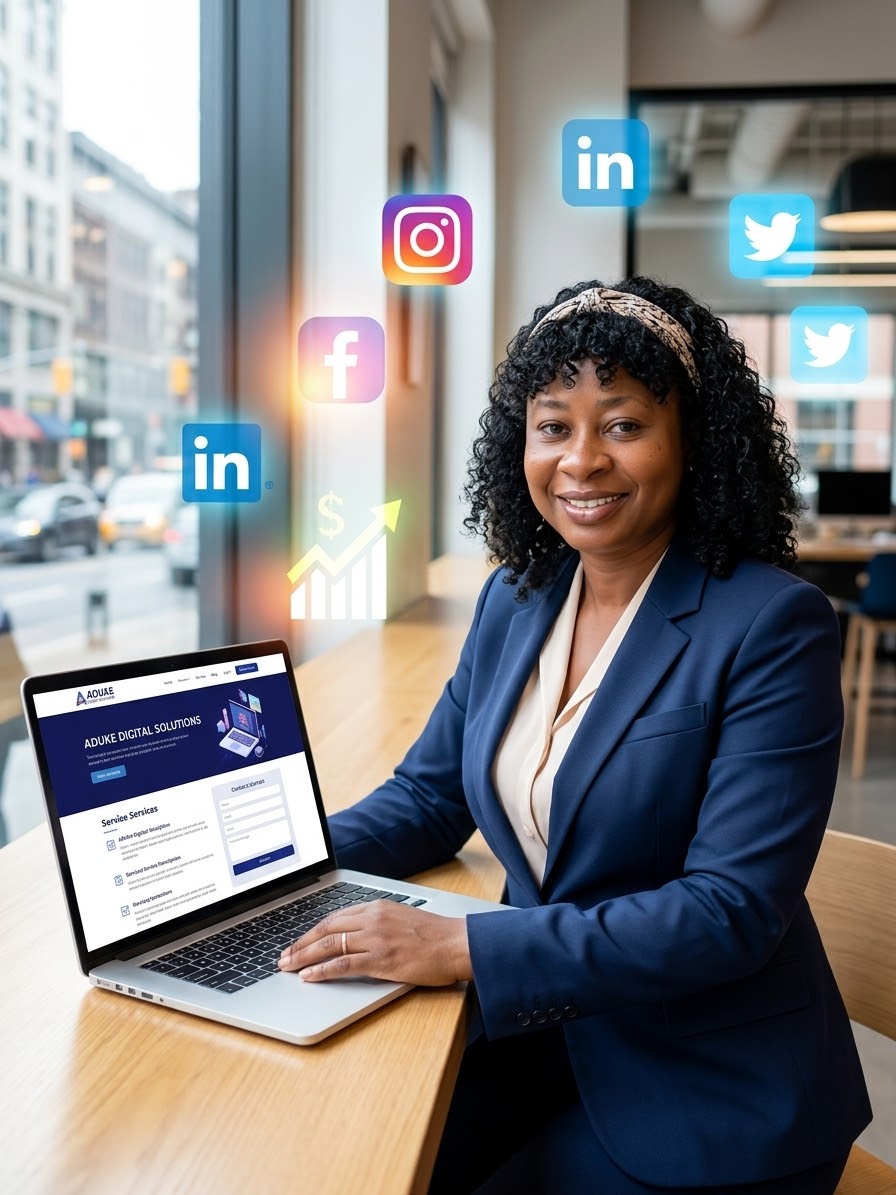
Website Owned, Social Media Rented: Why Every Business Needs Its Own Digital Home
In today's digital world, many business owners invest time, money and energy in building their presence on Facebook, Instagram, TikTok, WhatsApp and other social media platforms.
They post products, share promotional videos, interact with customers and run advertisements to attract new buyers. For some businesses, social media has become the primary means of finding customers and generating sales.
But there is an important question every business owner should ask:
If your social media account disappeared today, would your business still have a place online where customers could find you?
This question highlights a fundamental difference between owning your website and relying entirely on social media.
Your website is a digital asset you can build and manage. Your social media presence exists on a platform whose rules, features and access policies are controlled by another company.
That is why the principle is simple: Your website is owned digital infrastructure; your social media presence is rented digital space.
1. What Does It Mean to Own a Website?
Owning a website means establishing a digital home for your business using a domain name and a website hosting service.
For example, a business may register a domain such as yourbusiness.com and use it to showcase its services, products, contact details, portfolio, customer testimonials and other important information.
With the appropriate domain registration, hosting arrangement and administrative access, the business has greater control over its online presence.
Your website can help you:
Present your business professionally.
Display your products and services.
Receive enquiries and customer orders.
Publish articles and educational content.
Build your brand identity.
Collect customer leads with appropriate consent.
Integrate payment gateways and other business tools.
Improve your visibility through search engines.
Unlike a social media profile, your website can be designed around the specific needs of your business.
You decide how to organise your content, what features to provide and how customers interact with your brand, subject to applicable laws and the terms of your hosting and service providers.
2. Why Is Social Media Considered Rented Space?
Social media platforms provide valuable opportunities for businesses to reach audiences without building an entire online platform from scratch.
However, creating a business page or profile does not mean you own the underlying platform.
Facebook, Instagram, TikTok and other platforms determine their own rules, algorithms, advertising policies and account restrictions.
They can change how posts are distributed, introduce new requirements, remove content or restrict accounts that violate their policies.
Even when a business has thousands of followers, it does not control how many of those followers will see each post.
For example, imagine spending five years building an Instagram audience of 20,000 followers. If your account is suspended or compromised, you could lose access to that audience while trying to resolve the problem.
This does not mean social media is bad for business. It means that relying on a platform you do not control introduces risks that business owners should manage.
3. Your Followers Are Not the Same as Your Customer Database
Having thousands of followers can make a business look popular, but followers and customers are not the same thing.
A follower may enjoy your content without ever buying from you. Another follower may be interested in your products but never see your next advertisement because the platform does not show it to them.
Your business should therefore focus on building genuine customer relationships rather than merely increasing follower counts.
With an appropriately designed website, you can invite interested visitors to subscribe to a newsletter, request a quotation, create an account or make an enquiry.
When people voluntarily provide their contact details, you can develop permission-based communication channels, subject to privacy and data-protection requirements.
The goal is not simply to collect more data. It is to establish reliable ways to serve customers and maintain relationships with them.
4. Your Website Builds Long-Term Digital Value
A website can become more valuable as your business grows.
Over time, you may build a library of useful articles, product pages, service descriptions, customer resources and search-engine visibility.
These assets can continue attracting visitors long after an individual social media post has stopped receiving attention.
For example, a company that publishes useful articles about its services may attract potential customers who search Google for solutions to specific problems.
A well-structured website can also provide information to customers at any time, even when your business office is closed.
Unlike a social media post that quickly disappears from the audience's attention, a useful website page can remain accessible for years, provided it is maintained and hosted.
Website ownership is not entirely independent of service providers: domain registration, hosting, security and maintenance still require attention. Nevertheless, you generally have more control over your digital home than you do over a social media platform.
5. Social Media Is Still Important for Business Growth
The message is not that business owners should abandon social media.
In fact, social media can be one of the most effective ways to introduce people to your business.
Facebook can help you reach local communities. Instagram can showcase products visually. TikTok can help you share engaging short videos. WhatsApp can support customer conversations and follow-up.
Each platform offers different opportunities.
The smarter approach is to use social media as a channel for discovery, engagement and promotion while directing interested customers towards your website when appropriate.
Think of social media as the road that brings people to your business, while your website serves as the digital location where you present your business on your own terms.
6. What Happens When a Social Media Account Is Lost?
Businesses sometimes lose access to accounts because of hacking, forgotten credentials, impersonation, policy enforcement or other technical and administrative problems.
A business that relies entirely on one social media account may struggle to contact customers or communicate important updates when access is interrupted.
A website cannot prevent every digital problem, but it provides another channel through which customers can find your business.
You can reduce risk by:
Registering your domain in the business's name.
Keeping domain and hosting renewal details up to date.
Enabling strong passwords and two-factor authentication.
Maintaining secure backups of website files and databases.
Keeping administrative access under the business's control.
Using more than one appropriate customer communication channel.
Maintaining lawful, consent-based customer contact records.
Keeping social media recovery information current.
Digital independence is not achieved simply by launching a website. It also requires responsible management and security.
7. Why Every Small Business Needs a Website
Some small business owners believe a website is necessary only for large companies. This is no longer a sensible assumption.
A small business can use a website to establish credibility, display its offerings and make it easier for customers to find accurate information.
Consider a fashion designer, restaurant, school, consultant, property company or technology service provider.
Each can use a website to answer common customer questions, display relevant information and provide a clear way to make enquiries.
A website can also reduce repetitive work by providing business hours, pricing information, frequently asked questions, booking forms or product catalogues.
The type of website required will depend on the business. A small informational website may be sufficient for one company, while another may need online payments, customer accounts or a complete e-commerce system.
The important point is to build a digital presence that supports your actual business goals.
8. Your Website and Social Media Should Work Together
The strongest digital strategy combines the benefits of both channels.
A practical approach includes the following:
Step 1: Establish your website. Register an appropriate domain and create a professional website that clearly explains what your business offers.
Step 2: Make your website useful. Include accurate contact details, service descriptions, product information and clear calls to action.
Step 3: Promote your website through social media. Share useful content, product updates, videos and educational posts that encourage interested people to learn more.
Step 4: Build customer relationships. Where appropriate, invite visitors to subscribe, enquire, book appointments or make purchases through suitable channels.
Step 5: Measure your results. Track website visits, enquiries, conversions and sales rather than judging business success solely by likes and followers.
Step 6: Protect your digital assets. Maintain backups, secure your accounts and keep your domain and hosting arrangements under proper management.
This approach allows social media to support your website instead of becoming the only foundation of your online business.
9. A Website Is an Investment, Not Just an Expense
Some business owners focus only on the initial cost of developing a website.
However, the better question is whether the website can help the business achieve its objectives.
A properly planned website may generate enquiries, attract customers through search engines, simplify customer service and support online sales.
Of course, a website does not guarantee customers or profit. Its value depends on its quality, relevance, visibility, maintenance and the business's ability to convert visitors into customers.
A website that is never updated or promoted may deliver limited results.
The objective should therefore be to invest in a website that serves a clear purpose and grows alongside the business.
Conclusion: Build on Digital Ground You Can Control
Social media has transformed how businesses communicate with customers. It offers opportunities that would have been difficult or expensive to access in the past.
But a social media audience should not be the only digital asset your business depends on.
Your website provides a central place to present your brand, publish information, attract potential customers and support business transactions. Social media can then help bring people to that digital home.
Remember this principle:
Own your digital home. Use social media to attract visitors. Build customer relationships that do not depend entirely on one platform.
Do not spend years building an online audience without considering where that audience can find you if a platform changes its rules or your account becomes unavailable.
Your business deserves a digital foundation that you can manage, protect and develop for the long term.
Start building your website today, and let social media work alongside it—not in place of it.
💬 Comments
No comments yet. Be the first to comment!
← Back to Blog📚 Related Articles

Who Do You Call Your Friend? Who Is the Third Person in Your Marriage?
Marriage is designed to bring two people together to build a life, share responsibilities, make deci...
Read More →
Silence in Marriage: Causes, Consequences and Solutions – The Hidden Marriage Killer
Silence in Marriage: Causes, Consequences and Solutions – The Hidden Marriage KillerMarriage is expe...
Read More →
15 Types of Women Men Should Be Careful About Choosing as Wives
15 Types of Women Men Should Be Careful About Choosing as WivesMarriage is one of the most significa...
Read More →
15 Types of Men Women Should Be Careful About Choosing as Husbands
15 Types of Men Women Should Be Careful About Choosing as HusbandsMarriage is more than falling in l...
Read More →
When “We’ll Stop” Stops Working: Why Couples Cross Their Own Sexual Boundaries
Relationships built on clear values often run into a frustrating paradox: decision-making is clear i...
Read More →
7 Essential Topics Couples Must Discuss Before Marriage (Beyond Physical Intimacy)
Entering a life-long partnership is one of the most exciting milestones standard in adult life. Whil...
Read More →