Implementing and Evaluating the Effectiveness of Zero Trust in Society
Technology has become an essential part of modern society. People use digital platforms for banking, education, healthcare, communication, business transactions, and government services. Although these technologies offer convenience and efficiency, they also expose individuals and organisations to cyber threats, data theft, identity fraud, and unauthorised access.
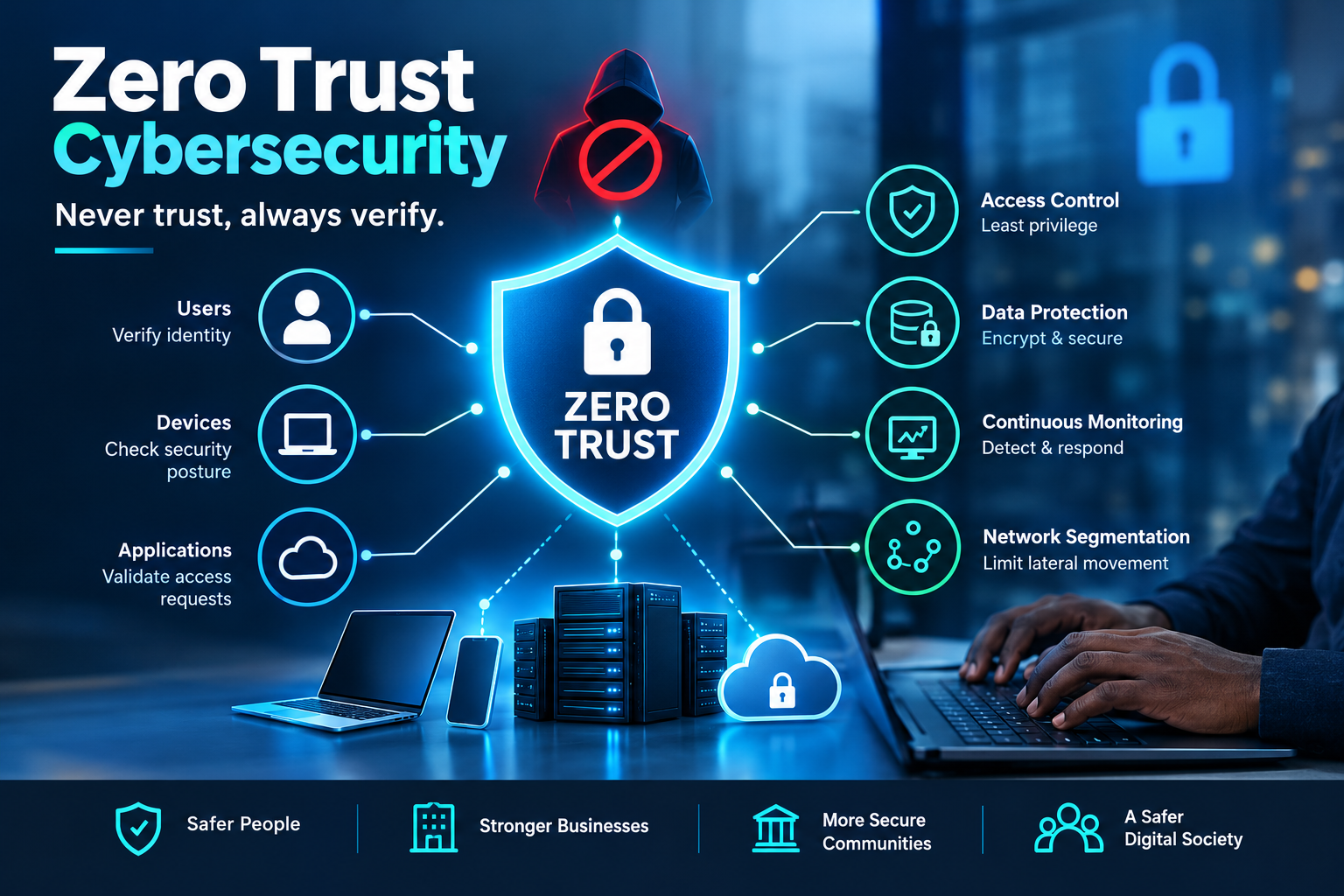
One approach to addressing these challenges is Zero Trust. Zero Trust is a cybersecurity model based on the principle of “Never trust, always verify.” It requires users, devices, and applications to be verified before they are granted access to digital resources.
Implementing Zero Trust can help individuals, businesses, and government institutions protect sensitive information and improve digital security.
What Is Zero Trust?
Zero Trust is a security framework that does not automatically trust any user or device simply because it is connected to an organisation's network. Instead, access decisions are based on identity verification, permissions, device security, and other relevant security conditions.
For example, an employee working in a bank should not automatically have access to every customer's financial records. The employee should only be able to access the information required for their assigned duties.
Zero Trust does not mean that people should distrust one another in their personal relationships. It refers specifically to verifying access to information systems and digital resources.
Implementing Zero Trust in Society
1. Banking and Financial Institutions
Banks can implement Zero Trust by requiring multi-factor authentication, monitoring unusual transactions, and restricting employees' access to financial records.
These measures can help reduce account compromise, identity theft, and unauthorised financial transactions.
2. Educational Institutions
Schools, colleges, and universities store students' personal information, examination results, financial records, and staff details.
By applying Zero Trust, educational institutions can ensure that students, teachers, administrators, and other staff members only access the information relevant to their roles.
3. Healthcare Organisations
Hospitals and healthcare centres manage confidential patient information. Zero Trust can help ensure that only authorised healthcare professionals access medical records.
Additional safeguards, such as encryption, access logs, and secure authentication, can reduce the risk of exposing patients' information.
4. Government Institutions
Government agencies maintain important records relating to citizens, taxation, public services, and national administration.
Zero Trust can help protect these records by verifying users, limiting access privileges, and monitoring suspicious activities.
5. Businesses and Private Organisations
Businesses depend on computers, mobile devices, online platforms, and cloud services to operate.
Implementing Zero Trust can help protect business information, customer databases, financial transactions, and intellectual property from cybercriminals and unauthorised insiders.
6. Personal and Household Security
Individuals can apply Zero Trust principles by enabling multi-factor authentication, using strong passwords, checking login alerts, keeping devices updated, and limiting application permissions.
These practices can help protect personal email accounts, social media profiles, online banking, and other digital services.
The Effectiveness of Zero Trust in Society
1. Reduction of Cybersecurity Risks
Zero Trust makes it more difficult for unauthorised users to gain access to sensitive systems. Verifying identities and limiting permissions can reduce opportunities for attackers to exploit compromised accounts.
2. Protection of Personal Information
Personal information is valuable to cybercriminals. Zero Trust helps organisations restrict access to sensitive data and reduce the likelihood of unauthorised disclosure.
3. Improved Accountability
Access logs and monitoring systems can help organisations determine who accessed particular resources and identify suspicious activities.
4. Limitation of Cyberattack Damage
If an attacker compromises one account or device, properly implemented access restrictions and network segmentation can limit the attacker's ability to move into other parts of the system.
5. Increased Confidence in Digital Services
People are more likely to use digital banking, online education, electronic healthcare, and government platforms when organisations take the protection of their information seriously.
6. Support for Regulatory Compliance
Zero Trust can support compliance with applicable privacy, data-protection, and cybersecurity requirements. However, adopting the model alone does not automatically guarantee compliance.
Challenges of Implementing Zero Trust
Despite its benefits, implementing Zero Trust presents several challenges.
High implementation costs: Some organisations may need to invest in security software, reliable infrastructure, monitoring systems, and trained personnel.
Limited technical expertise: Organisations without skilled cybersecurity professionals may struggle to design and maintain effective Zero Trust systems.
Poor internet connectivity: In areas with unreliable internet access, including some communities in Nigeria, authentication and cloud-based security services may be difficult to use consistently.
User inconvenience: Poorly designed authentication procedures can make systems difficult to access and reduce productivity.
Privacy concerns: Excessive monitoring may interfere with privacy if organisations collect more information than necessary or fail to protect monitoring records.
Insider threats: Employees with legitimate access may still misuse information. Zero Trust reduces this risk but cannot eliminate it completely.
Legacy systems: Older computer systems may not support modern authentication and access-control technologies without upgrades.
How to Improve the Effectiveness of Zero Trust
To achieve better results, organisations should take the following steps:
Identify important systems, sensitive data, users, and devices.
Introduce multi-factor authentication for accounts and resources that require additional protection.
Apply the principle of least privilege, giving each user only the access needed for their duties.
Keep software, operating systems, and security tools updated.
Encrypt sensitive information during storage and transmission.
Monitor suspicious activities while respecting privacy and applicable laws.
Train employees and members of the public to recognise phishing and other cyber threats.
Review permissions regularly and remove access that is no longer necessary.
Develop incident-response procedures for investigating and recovering from security breaches.
Implement security improvements gradually, prioritising the most important systems and risks.
The Role of Government and Society
Governments, educational institutions, technology companies, and private organisations all have roles to play in improving cybersecurity.
Governments can encourage responsible cybersecurity practices, strengthen data-protection enforcement, and support public awareness programmes. Educational institutions can teach digital safety, while businesses can invest in appropriate security controls.
Citizens also have a responsibility to protect their accounts, avoid suspicious links, and report suspected cybercrime through appropriate channels.
Cooperation between these groups can make digital services safer and more reliable.
Conclusion
Zero Trust is an important cybersecurity approach for a society that increasingly depends on digital technology. By verifying access requests, restricting permissions, monitoring suspicious activities, and protecting sensitive information, organisations can reduce cybersecurity risks and strengthen public confidence in digital services.
However, Zero Trust is not a single product or a guarantee of complete security. Its success depends on careful planning, suitable technology, trained personnel, responsible monitoring, and continuous improvement.
The goal of Zero Trust is not to eliminate trust between people, but to ensure that access to digital information and systems is granted securely, appropriately, and only when justified.
💬 Comments
No comments yet. Be the first to comment!
← Back to Blog📚 Related Articles

Bootstrap and Templates for Developers: Build Websites Faster
Bootstrap and Templates for Developers: Build Websites FasterBuilding a website from scratch can tak...
Read More →
The Use of Technology to Wipe Off Local Techniques
Technology has become a major force in the development of modern society. It has changed the way peo...
Read More →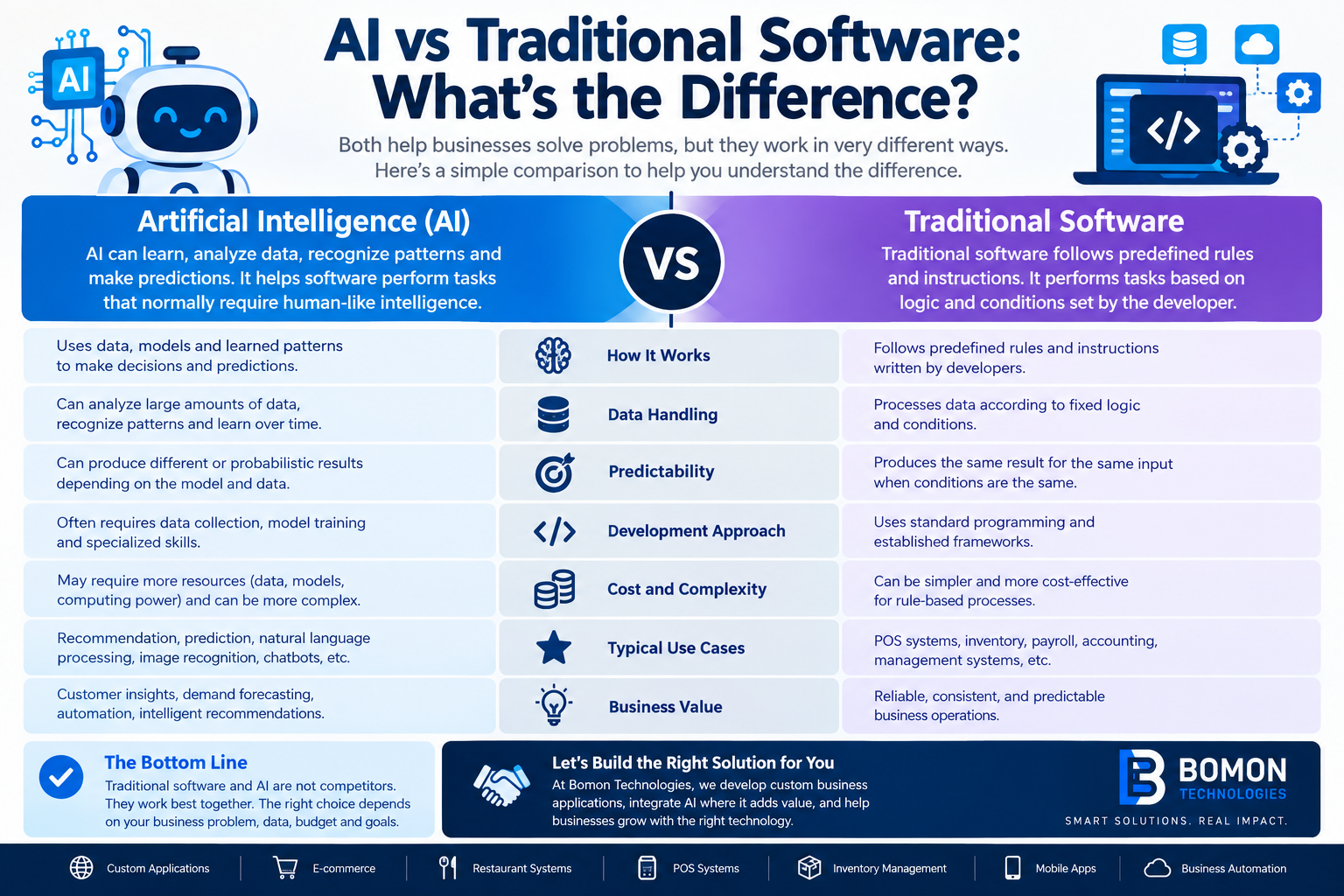
AI vs Traditional Software: What's the Difference?
Technology has changed the way businesses operate. Today, businesses can choose from traditional sof...
Read More →
Common Laravel Errors and How to Fix Them
Laravel makes modern PHP application development faster and more structured. However, like any softw...
Read More →
Essential Skills Every Professional Should Develop
The workplace is constantly changing, and professionals are expected to do more than simply have aca...
Read More →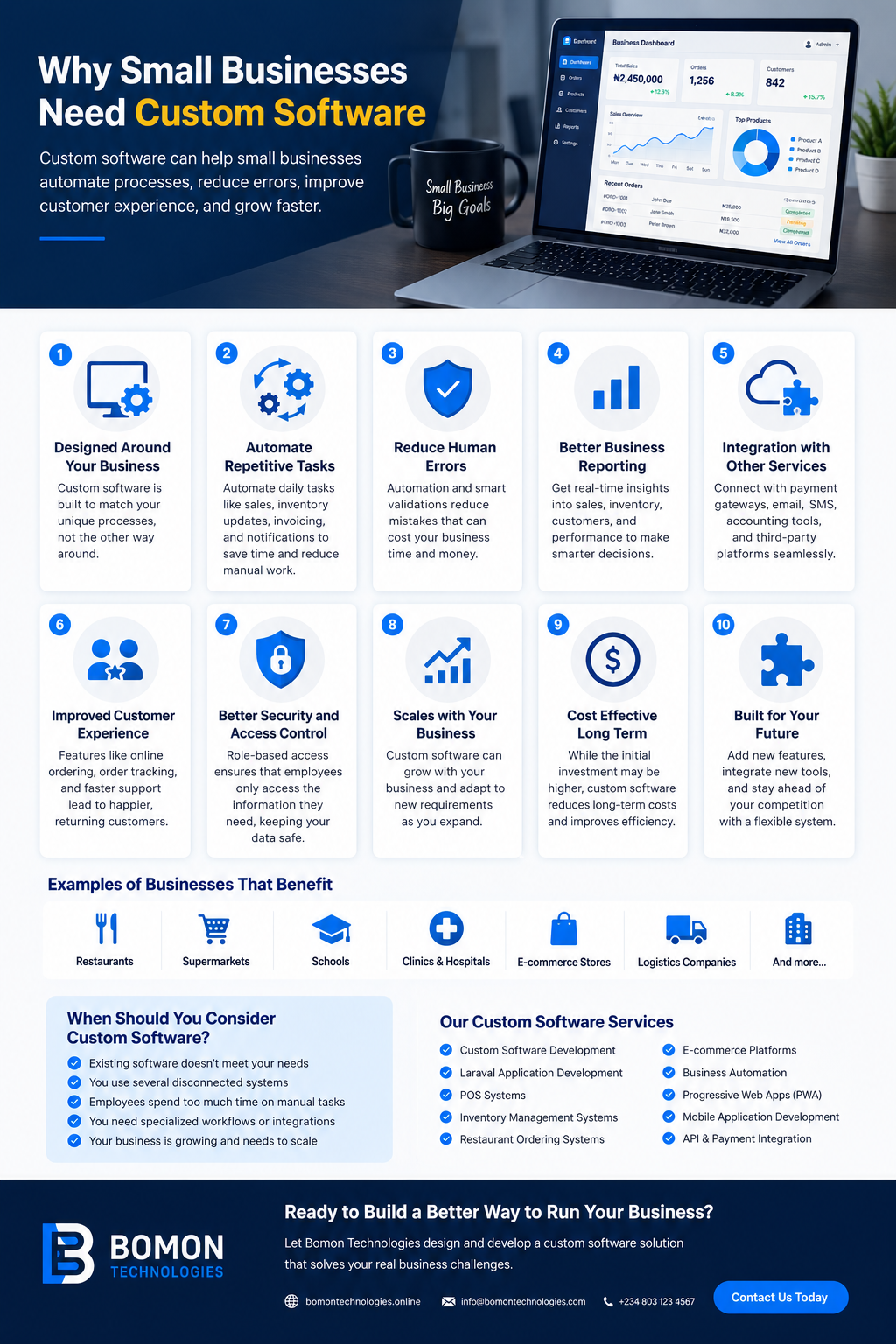
Why Small Businesses Need Custom Software
Small businesses are increasingly using technology to improve the way they operate. However, many bu...
Read More →