The Use of Technology to Wipe Off Local Techniques
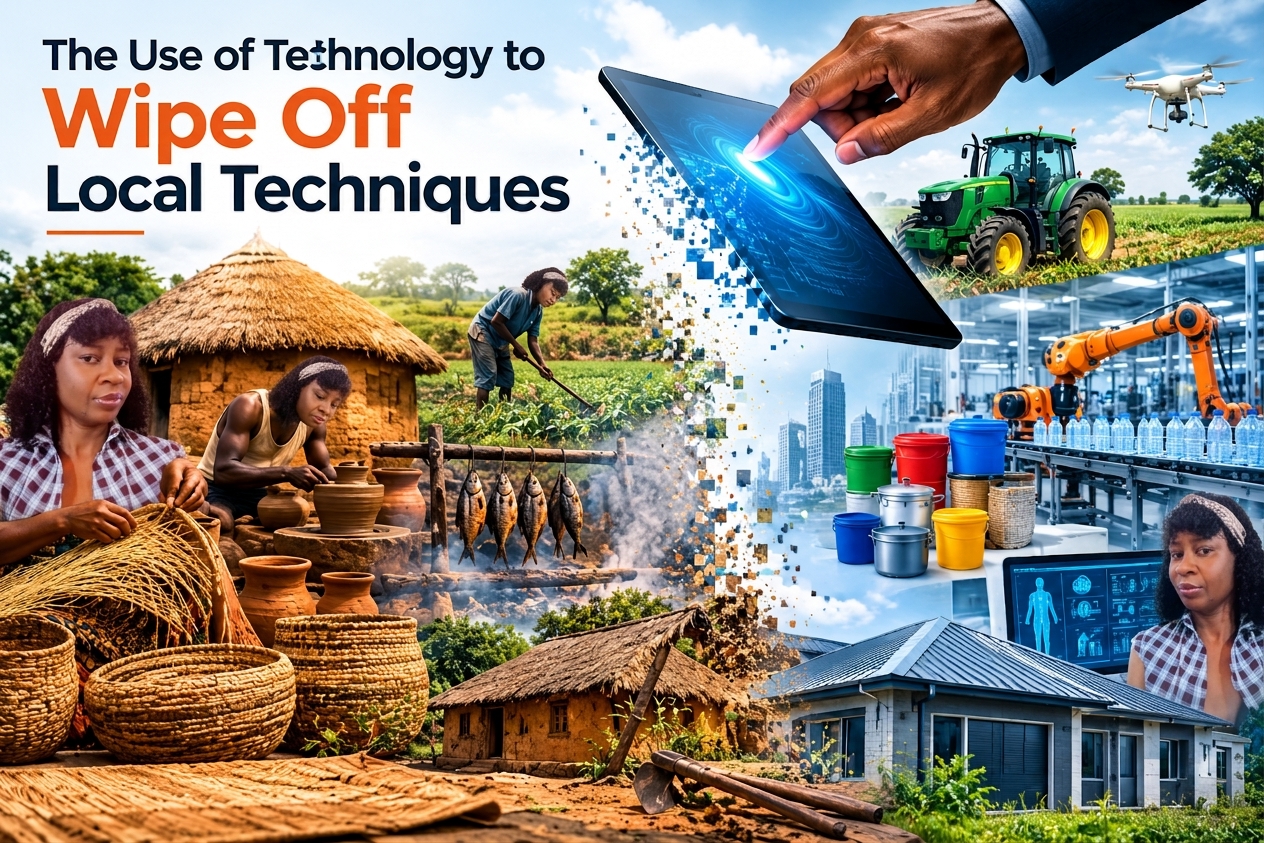
Technology has become a major force in the development of modern society. It has changed the way people farm, build houses, preserve food, manufacture goods, communicate, and provide healthcare. While these changes have improved productivity and efficiency, they have also contributed to the gradual disappearance of some traditional techniques.
Local techniques are indigenous methods, skills, tools, and practices developed by communities and passed from one generation to another. Examples include traditional farming, pottery, weaving, blacksmithing, local food preservation, traditional fishing, and indigenous building methods.
Although some local techniques have become less practical in modern environments, others remain valuable because they are affordable, sustainable, and closely connected to cultural identity.
How Technology Can Wipe Off Local Techniques
1. Replacement of Traditional Tools
Modern machines and equipment can perform tasks that were previously carried out using locally made tools. For example, mechanised farming equipment can replace hoes and cutlasses for certain agricultural operations. As traditional tools become less widely used, the skills involved in making and maintaining them may gradually disappear.
2. Loss of Indigenous Knowledge
Young people may prefer modern occupations and technologies rather than learning traditional skills from older generations. If this continues without documentation or training, valuable indigenous knowledge may be lost.
3. Industrial Production
Factories can manufacture products in large quantities and at competitive prices. Consequently, handmade pottery, woven baskets, traditional textiles, and other locally produced goods may struggle to compete with mass-produced alternatives.
4. Modern Agricultural Practices
Tractors, irrigation systems, improved seeds, and other agricultural technologies can reduce dependence on certain traditional farming methods. Although these innovations may increase productivity, they can also weaken the transmission of indigenous agricultural knowledge when traditional methods are completely abandoned.
5. Modern Healthcare
Modern medical science has introduced diagnostic equipment, effective medicines, and advanced treatments. However, when traditional medicinal knowledge is abandoned without documentation or research, potentially valuable information about indigenous plants and practices may be lost. Traditional remedies should be scientifically evaluated for safety and effectiveness before being recommended for medical use.
6. Cultural Erosion
Technology can influence people's lifestyles, preferences, and values. When communities abandon their traditional crafts, languages, building methods, and cultural practices without preserving their knowledge, aspects of their cultural heritage may disappear.
Examples of Technology Replacing Local Techniques in Nigeria
Traditional food preservation: Refrigerators and freezers have reduced dependence on some traditional preservation methods, although smoking, fermentation, and sun-drying remain important in many communities.
Traditional construction: Concrete blocks, modern roofing sheets, and industrial building materials have replaced some traditional methods involving mud walls, thatched roofs, and locally sourced materials.
Traditional textile production: Factory-made fabrics compete with handwoven textiles and other indigenous forms of cloth production.
Traditional farming: Mechanised equipment and modern irrigation systems can replace certain labour-intensive farming practices.
Traditional craftsmanship: Manufactured plastic, metal, and ceramic products compete with locally produced pottery, baskets, and household utensils.
These examples show that technological change can reduce the use of traditional techniques, although the extent of replacement varies between communities.
Positive Effects of Using Modern Technology
1. Increased Productivity
Modern machines can help farmers, manufacturers, and businesses produce more goods in less time.
2. Reduced Physical Labour
Mechanisation can reduce demanding manual work and allow people to complete tasks more efficiently.
3. Improved Healthcare
Modern medical technologies help healthcare professionals diagnose and treat many conditions more effectively.
4. Better Food Preservation
Refrigeration, improved packaging, and modern storage systems can extend the shelf life of many foods and reduce certain types of spoilage.
5. Improved Communication
Mobile phones, computers, and internet services make it easier to share information, learn new skills, and connect with people around the world.
6. Economic Development
Modern technologies can support industrial growth, create new employment opportunities, and improve the competitiveness of local businesses.
Negative Effects of Technology on Local Techniques
1. Loss of Cultural Heritage
When traditional skills and practices disappear, communities may lose important connections to their history and identity.
2. Unemployment Among Traditional Artisans
Artisans who depend on traditional crafts may lose customers when cheaper or more convenient manufactured products dominate the market.
3. Loss of Indigenous Knowledge
Traditional knowledge about local plants, weather patterns, soil conditions, natural materials, and sustainable practices may disappear when younger generations no longer learn it.
4. Increased Dependence on Imported Products
Excessive dependence on imported tools, machinery, and manufactured goods can weaken local production and expose communities to external supply disruptions.
5. Environmental Problems
Some modern technologies depend on fossil fuels, generate electronic waste, or encourage excessive consumption of resources. However, technology can also help protect the environment through renewable energy, efficient production, and improved waste management.
6. Decline in Traditional Industries
Small-scale pottery, weaving, blacksmithing, and other traditional industries may struggle to survive without financial support, training, and access to markets.
Should Local Techniques Be Wiped Off Completely?
Some people argue that local techniques should be completely replaced because modern technologies are often faster, more efficient, and better suited to large-scale production.
There are valid reasons to replace particular traditional methods when they are demonstrably unsafe, unreliable, environmentally damaging, or unable to meet essential standards. Modern equipment may also improve productivity and reduce unnecessary physical labour.
However, completely wiping off all local techniques would be unwise. Some traditional practices are economical, environmentally sustainable, adapted to local conditions, and valuable for preserving cultural identity.
Rather than rejecting every local technique, society should evaluate each practice according to its usefulness, safety, cost, and environmental impact. Ineffective methods can be improved or replaced, while valuable ones should be preserved and developed.
How to Prevent the Disappearance of Valuable Local Techniques
Document indigenous knowledge: Record traditional skills, processes, and practices before they disappear.
Teach younger generations: Introduce useful traditional crafts and indigenous knowledge through schools, apprenticeships, and vocational training.
Support local artisans: Provide access to funding, modern equipment, training, and wider markets.
Combine traditional and modern methods: Improve local techniques with appropriate technology instead of automatically abandoning them.
Promote local products: Encourage consumers to appreciate quality indigenous goods and support local industries.
Encourage research: Universities and research institutions can investigate traditional methods and determine how they can contribute to modern development.
Protect cultural heritage: Communities and governments should support programmes that preserve valuable traditional practices.
Conclusion
Technology has transformed society by improving productivity, communication, healthcare, transportation, and industrial production. However, this progress has also contributed to the decline of some local techniques and traditional industries.
The disappearance of valuable indigenous knowledge can result in cultural loss, unemployment among artisans, and greater dependence on external products and systems.
The solution is not to reject modern technology or preserve every traditional practice without question. Instead, society should adopt a balanced approach that replaces unsafe or ineffective techniques while preserving, improving, and promoting those that remain useful.
True development occurs when society embraces technological progress without unnecessarily sacrificing its cultural heritage, indigenous knowledge, and local capacity for innovation.
💬 Comments
No comments yet. Be the first to comment!
← Back to Blog📚 Related Articles

Bootstrap and Templates for Developers: Build Websites Faster
Bootstrap and Templates for Developers: Build Websites FasterBuilding a website from scratch can tak...
Read More →
Implementing and Evaluating the Effectiveness of Zero Trust in Society
Technology has become an essential part of modern society. People use digital platforms for banking,...
Read More →
AI vs Traditional Software: What's the Difference?
Technology has changed the way businesses operate. Today, businesses can choose from traditional sof...
Read More →
Common Laravel Errors and How to Fix Them
Laravel makes modern PHP application development faster and more structured. However, like any softw...
Read More →
Essential Skills Every Professional Should Develop
The workplace is constantly changing, and professionals are expected to do more than simply have aca...
Read More →
Why Small Businesses Need Custom Software
Small businesses are increasingly using technology to improve the way they operate. However, many bu...
Read More →